




Deck Foundation Blocks: What They Are and Which to Use
Quick Answer for Builders and DIYers:
Deck foundation block, also called deck footing blocks, deck support blocks, or deck base blocks, are preformed structural supports used to build the foundation of a floating deck or shed without digging or pouring concrete. They sit on a prepared ground surface and carry the full weight of the structure above. For example, TuffBlock is a certified polymer deck foundation block designed for no-dig deck and shed foundations. This guide explains how they work, what the different types are, and how to choose the right one for your build.

JUMP TO WHAT YOU NEED
In this guide:
- What are deck foundation blocks?
- Types of deck foundation blocks
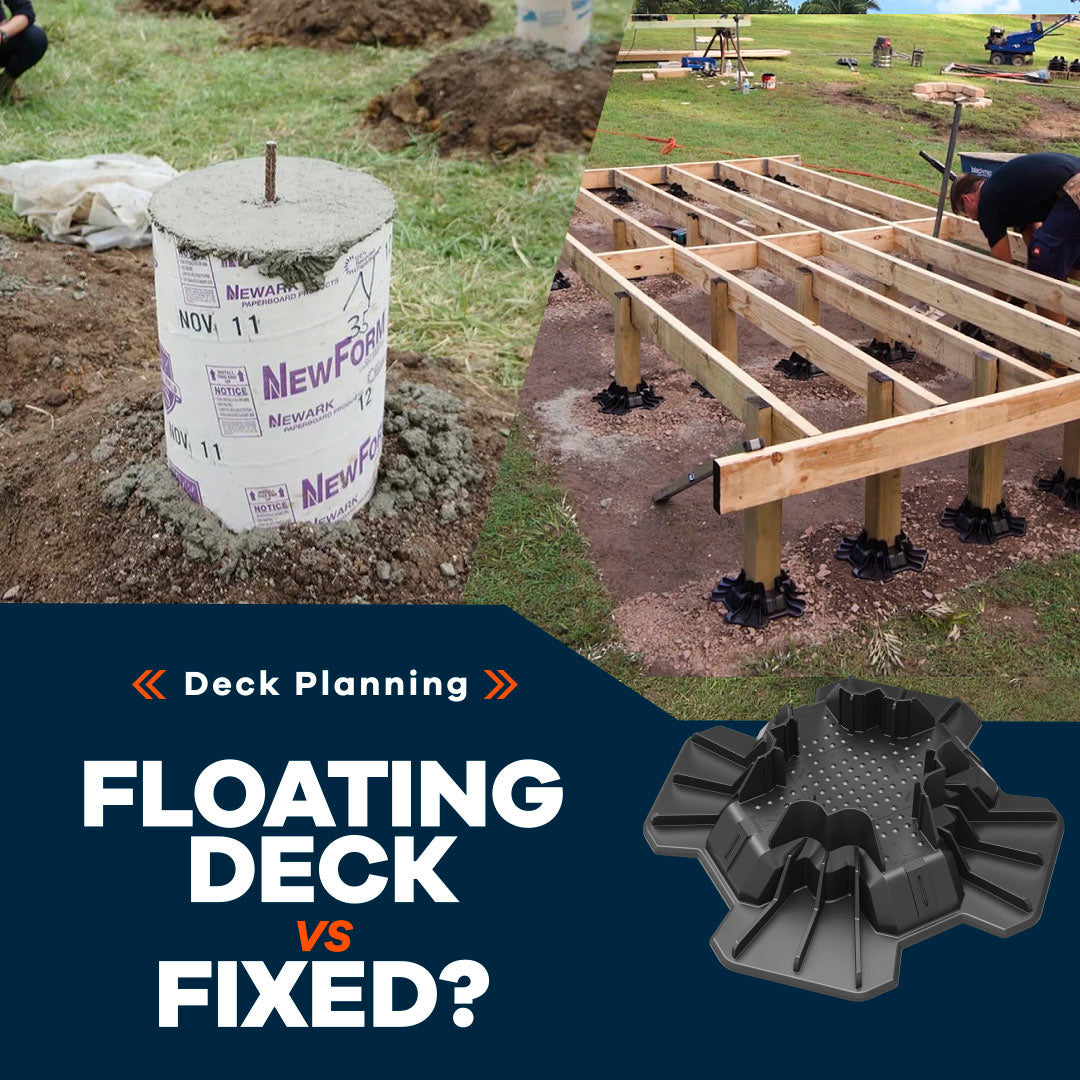
- Deck foundation blocks vs concrete footings
- How to choose the right deck foundation block
- What can you build with deck foundation blocks?
- How many deck foundation blocks do you need?
- How deck foundation blocks are installed
- Deck foundation blocks on different ground types
- FAQ
What are deck foundation blocks?
Deck foundation blocks are preformed structural supports used as an alternative to traditional in-ground concrete footings for floating decks, shed bases, walkways, landings, and similar outdoor structures.
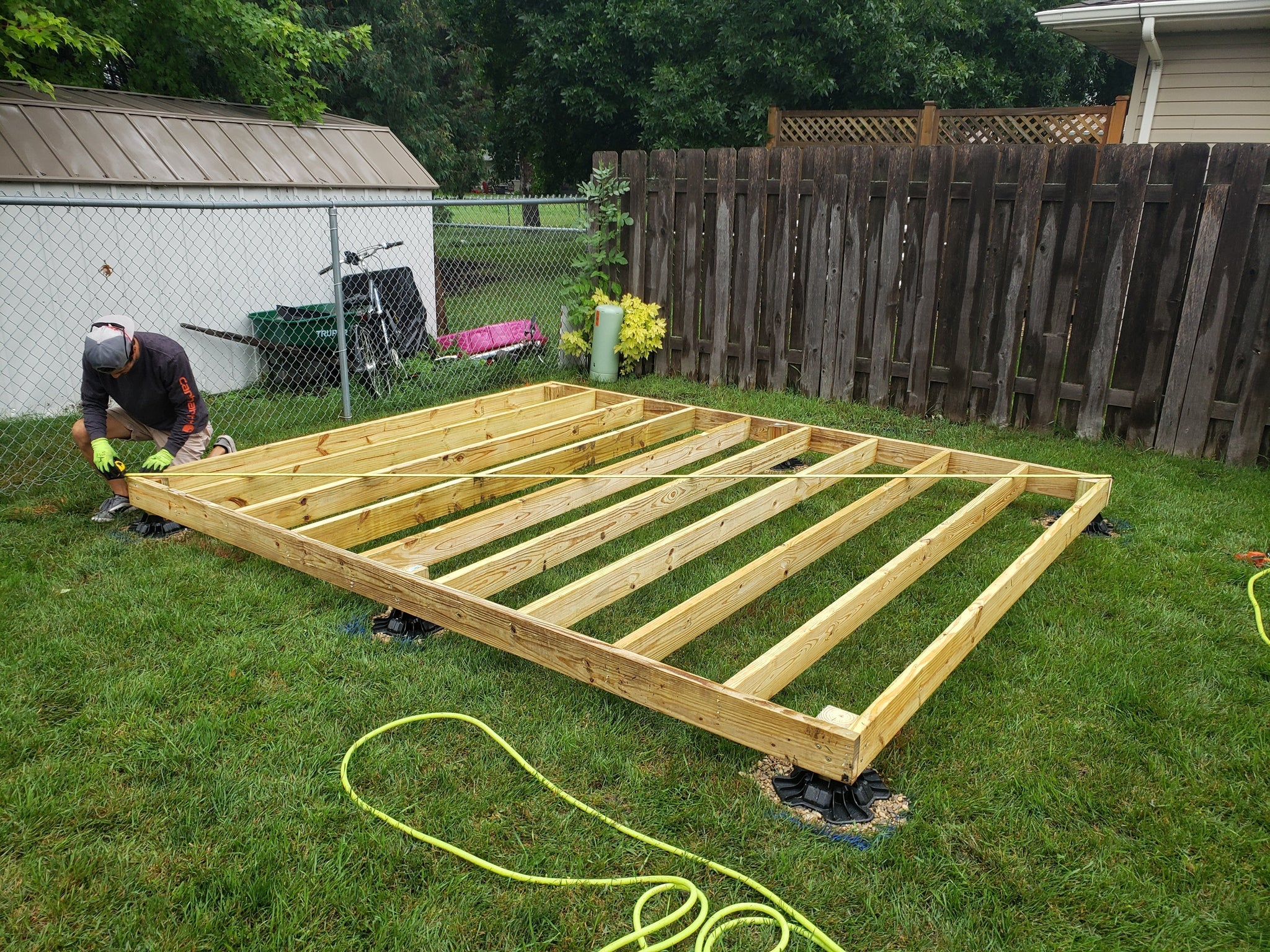
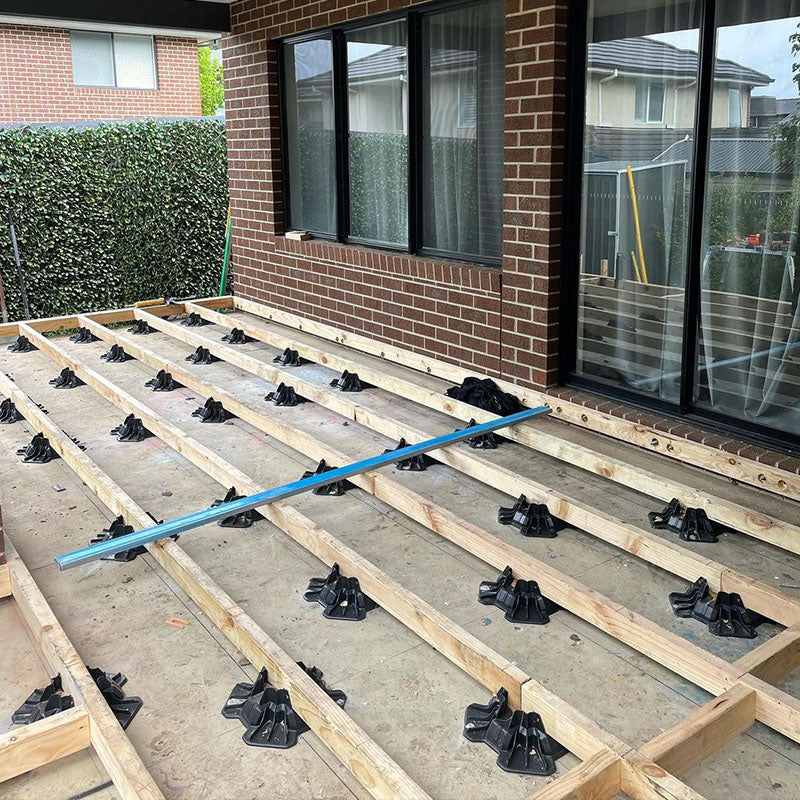
Instead of digging holes, mixing concrete, and waiting days for footings to cure, deck foundation blocks sit on a prepared surface, typically compacted soil with a gravel base, and the lumber frame of the structure rests directly on top of them. The blocks are molded with grooves or saddles that accept standard lumber dimensions, so joists, bearers, and posts drop straight in without cutting or custom fitting
The concept is based on the floating foundation system, a building method that has been used in North America since the late 1980s, a concept that has been used across North America for decades, particularly for low-profile and freestanding outdoor structures. The term "floating" refers to the fact that the foundation sits on the surface rather than being fixed below it, allowing the structure to move very slightly with natural ground movement rather than resisting it. This is particularly advantageous in freeze-thaw climates, on unstable soil, and anywhere excavation is difficult or undesirable.
Deck foundation blocks go by a range of names depending on context:
- Deck foundation blocks
- Deck footing blocks
- Deck support blocks
- Deck base blocks
- Deck pier blocks
- Floating deck blocks
- Instant foundation blocks
They are all variations on the same concept. The differences between products — material, load rating, profile height, certification — are what actually matter when choosing one.
Types of Deck Foundation Blocks
There are three main categories of deck foundation block currently available in the US market. Understanding the differences between them is the most important step in choosing the right product.
Type 1: Precast Concrete Deck Blocks

The original deck foundation block, a precast grey concrete block fed with slots or saddles to accept standard lumber. These have been sold at hardware stores for decades and are familiar to most builders.
What they are: Solid concrete blocks, typically available in a standard saddle shape designed to accept 2x joists lying flat or 4x4 posts standing upright.
Typical weight: 34–41 lbs per block
Pros:
- Widely available at Home Depot, Lowe's, and Menards
- Low upfront cost per block
- Familiar to experienced builders
Cons:
- Heavy — difficult to carry, transport, and position
- Absorb moisture over time, can wick water into lumber
- Crack and degrade in freeze-thaw conditions
- Minimum build height typically 12"–18", not suitable for low-profile decks
- No certified load rating published
- No warranty
- Very limited adjustability on sloped ground, no post extension system
- Cannot accommodate real-world lumber size variation
Concrete deck blocks are one of the most commonly recognized options in this category, but they are not always the best fit, particularly for low-profile decks, sloped sites, or builds where weight and installation speed matter.
Type 2: Plastic / Polymer Deck Foundation Blocks (Certified)

The modern engineered alternative to concrete deck blocks — made from structural-grade polymer with a floating foundation design. TuffBlock is one of the most recognized certified polymer deck foundation systems available in the USA.
What they are: Lightweight structural blocks made from high-strength recycled polyolefin with a molded saddle system that accepts joists directly or post extensions for raised builds. ICC-ES certified and independently load-tested.
Typical weight: 1.5 lbs per block (TuffBlock)
Pros:
- 27x lighter than concrete deck blocks, one person can carry multiple at once
- Load-rated to 1,700 lbs per block, break-tested to 11,000 lbs
- ICC-ES certified, compliant with 2021 & 2018 IBC and IRC
- Build as low as 6" above grade — true low-profile capability
- UV-stabilized, won't degrade outdoors
- Won't absorb moisture or crack in freeze-thaw conditions
- Works with 4x4 post extensions for levelling on sloped ground
- Fits real-world lumber variation for joists, bearers and posts
- 25-year warranty. Zero claims to date.
- Made in USA
- Free shipping
Cons:
- Higher upfront cost per block than generic concrete blocks (though competitive when total labor and install time are factored in)
- Some builders unfamiliar with the system initially
Type 3: Unverified Plastic Imitators

A growing number of unverified plastic deck blocks have entered the market, typically imported without certification. These resemble certified polymer blocks in appearance but lack the engineering behind them.
What they are: Plastic blocks of unknown material composition, typically sold at low price points without published load ratings, testing data, or warranties.
What we did: We had TuffBlock independently tested to destruction by a third-party laboratory to verify exactly how our blocks perform under real structural loads
The risk: Without verified load ratings and certified material composition, there is no way to know how these products will perform under real structural loads or prolonged UV and weather exposure. Without verified load ratings, UV testing, or warranty coverage, it is difficult to know how these products will perform under long-term structural loads or outdoor exposure.
What to check: Before purchasing any plastic deck foundation block, confirm it has a published, independently verified load rating, ICC-ES or equivalent certification, UV-stabilization confirmation, and a manufacturer's warranty. If any of these are absent, treat the product as unverified regardless of claimed specifications.
For a deeper comparison, read our guide to plastic deck blocks vs concrete.
Deck Foundation Blocks vs Concrete Footings
Deck foundation blocks of any type are a fundamentally different approach to deck foundations compared to traditional in-ground concrete footings. Here is how they compare on a standard 12' × 12' floating deck:

| Feature | Deck Foundation Blocks (TuffBlock) | In-Ground Concrete Footings |
|---|---|---|
| Digging required | No | Yes (30" to 48"+ deep) |
| Concrete required | No | Yes |
| Total material weight | ~27 lbs | ~1,400–2,000 lbs |
| Foundation install time | 45–70 minutes | 9–14 hours set up + up to 48 hours curing |
| Ready to frame | Immediately | After curing (days to weeks) |
| Risk of hitting utilities | None | Yes |
| Lowest build height | 6" | Typically 12"–18" minimum |
| Adjustable after placement | Yes | No |
| Permit required | Not always (Always check local building requirements.) | Usually yes |
| Relocatable | Yes | No |
| Cost per support point | ~$12 | $24–$30+ |
| Certified | ICC-ES | None |
| Warranty | 25 Years | None |
How to Choose the Right Deck Foundation Block
Use this as a decision framework before you buy:
Step 1: Confirm it has a verified load rating
Any product used as a structural foundation must have a published, independently verified load rating, not a claimed figure without data to support it. For TuffBlock, the rating is 1,700 lbs per block with a break test to 11,000 lbs, independently assessed. If a product cannot provide verification of its load rating, do not use it as a foundation.
You can also view the TuffBlock compression test results for a closer look at independent testing.
Step 2: Check for ICC-ES certification
The International Code Council Evaluation Service assesses building products for compliance with US building codes. ICC-ES certification means the product has been independently assessed against the 2021 and 2018 International Building Code and International Residential Code. This is what your inspector will want to see when a permit is required. TuffBlock holds ICC-ES certification — most concrete and unverified plastic blocks do not.
Step 3: Consider your build height
If you want a ground-level or low-profile deck — anything under 12" above grade — standard concrete deck blocks cannot accommodate this. Their physical height forces a minimum build elevation of 12"–18". TuffBlock allows builds as low as 6" above grade, making it the only option for true low-profile floating decks.
Step 4: Consider your ground conditions
Flat, level ground: Concrete blocks are manageable on perfectly flat ground. TuffBlock is faster but both work.
Sloped ground: TuffBlock with 4×4 post extensions is significantly easier to level on sloped ground than concrete blocks, which have very limited adjustability. Professional builders on sloped residential lots consistently prefer TuffBlock for this reason.
Freeze-thaw climate: Concrete blocks absorb moisture and can crack through repeated freeze-thaw cycles. TuffBlock does not absorb moisture and is designed for cold climate use, the floating foundation system was originally developed specifically for freeze-thaw regions.
Soft or unstable soil: Both types require a stable, compacted base. If your soil is very soft, use more blocks to increase the total base area and spread the load, this is easier with TuffBlock (lightweight, easy to reposition) than with concrete blocks. For full ground preparation guidance, see our step-by-step prep guide.
Step 5: Consider your build profile
- DIY first-timer: Lighter, faster, more forgiving on adjustments, and covered by BuildTuff's resources, calculator, and installation guides.
- Professional builder doing multiple sheds or decks per week: The labor saving at scale, 50%+ faster foundation install, directly affects job profitability.
What Can You Build with Deck Foundation Blocks?
Deck foundation blocks are not just for decks. Any structure that needs a stable, level base without a fixed concrete foundation is a candidate:
Floating decks — ground-level, low-profile, and freestanding. The most common application. TuffBlock allows builds as low as 6" for a true patio-level finish.
Shed and workshop bases — a TuffBlock shed foundation is faster to build, cheaper, and significantly more adjustable on sloped ground than any concrete alternative. It also keeps floor lumber off the soil, reducing rot and termite risk. See our full guide to a shed foundation with deck blocks.
Garden stairs and landings — TuffBlocks support stair stringers and landing frames cleanly at each contact point without the need for individual poured piers.
Walkways and raised paths — connecting structures, spanning uneven terrain, and creating accessible pathways without excavation or concrete.
Hot tub platforms — possible in some applications when the frame, spacing, total load and local code requirements are properly assessed. Always confirm the design with a qualified builder or engineer.
Cubby houses, playhouses, and garden studios — fast foundation for lightweight structures, suitable for DIY builds without specialist equipment.
Pool surrounds and outdoor shower platforms — TuffBlock does not absorb moisture, making it ideal for wet environments.
Greenhouse bases — no excavation near root systems, fast to install, adjustable on slopes.
How Many Deck Foundation Blocks Do You Need?
Block count depends on your structure's dimensions, your lumber size, your joist or bearer layout, and whether you are building ground-level (joist-direct method) or raised (bearer method).
As a quick guide for ground-level floating decks at 16" on-centre joist spacing:
| Deck Size | Estimated TuffBlocks |
|---|---|
| 8" × 12" | 24 blocks |
| 10" × 10" | 21 blocks |
| 12" × 12" | 24–28 blocks |
| 20" × 12" | 42 blocks |
| 20" × 16" | 56 blocks |
Number of deck blocks for common shed sizes:
| Shed Size | Estimated TuffBlocks |
|---|---|
| 8' × 10' | 20 blocks |
| 10' × 12' | 28 blocks |
| 12' × 16' | 41 blocks |
| 16' × 24' | 90 blocks |
TuffBlocks can also be used as post supports, allowing wider spacing between blocks and potentially reducing the total number required for your project. See our Installation Guide for recommended post-supported configurations and span requirements.
For your exact number, use our TuffBlock Deck Calculator.
Or read our full spacing guide: How Many Deck Blocks Do You Need?
Shop TuffBlock with free shipping across the USA
How Deck Foundation Blocks Are Installed
The installation process for deck foundation blocks is straightforward — three steps regardless of structure type.
 1
1Prepare Your Base
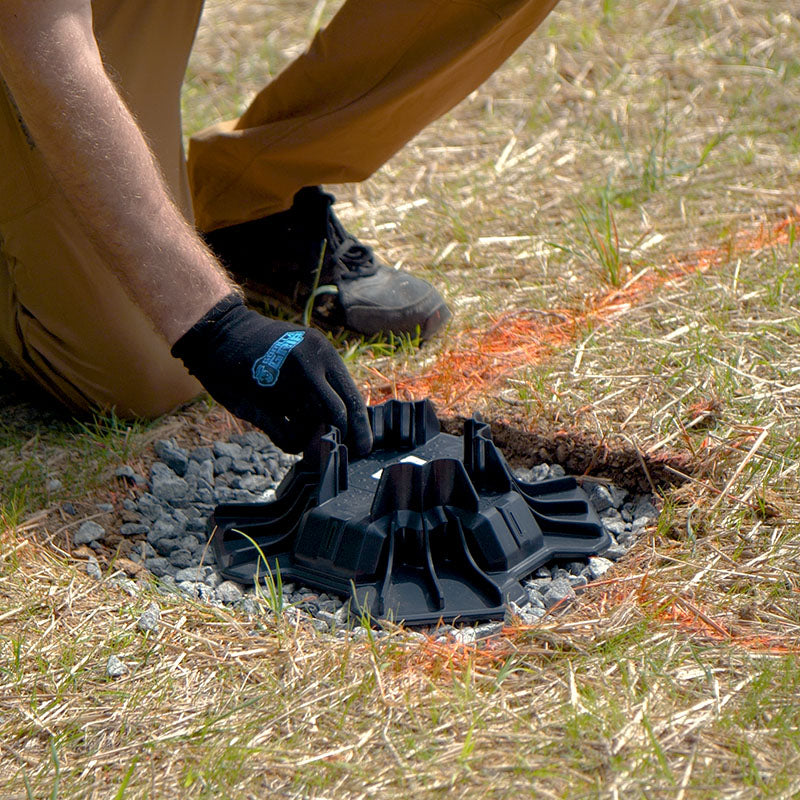
At each block position, clear vegetation, compact the soil firmly, and add 2"–4" of compacted gravel. Level the gravel surface. This gravel base provides drainage beneath the block and gives you a fine-tuneable surface for levelling. Do not place blocks directly on uncompacted soil or turf. Here is a more detailed breakdown to prep your ground.
 2
2Place & Level TuffBlocks
Set the block on the prepared gravel. Check level in both directions with a spirit level. Adjust gravel depth beneath the block as needed until it sits perfectly level. On sloped ground, use 4×4 post extensions sitting in the block saddle to bring the structure up to a level plane — the blocks themselves sit on the ground wherever needed; the posts handle the height variation.
 3
3Build Your Frame & Deck
Once all blocks are placed and level, set joists, bearers, or posts into the block saddles and begin framing immediately. No waiting. No curing. TuffBlock accepts 3.5"×3.5" or 4"×4" posts and 1½"–2" joists and bearers — standard lumber dimensions used across the USA.
Check local code for: Decks attached to your home & structures more than 40" above grade.
Deck Foundation Blocks on Different Ground Types
One of the most practical questions builders ask is whether deck foundation blocks work on their specific site conditions. Here is a straightforward breakdown:
Compacted soil or subsoil — ideal. Prepare with compacted gravel at each block position. The standard application.
Existing concrete slab or patio — TuffBlocks sit directly on concrete with no preparation, drilling, or anchoring. Popular for adding a lumber deck level over an existing slab.
Gravel — works well on a properly compacted gravel base. Not suitable on loose, uncompacted gravel.
Pavers — TuffBlocks can sit on pavers where the paver base is stable and level. Good for deck extensions over existing paved areas.
Grass and turf — clear vegetation and compact the soil beneath first. Never place directly on uncompacted turf — the block will shift as the turf compresses over time.
Sandy soil — the floating foundation system was designed to accommodate some ground movement. On sandy soil, ensure good compaction and use a gravel base. Adding more blocks increases the total base area and reduces per-block load, which helps on softer ground.
Wet or flooded ground — drainage must be addressed first. Improve drainage with gravel or additional drainage infrastructure before placing any foundation.
Freeze-thaw climates — use a deeper gravel base (4"–6") to improve drainage and reduce frost expansion pressure beneath each block. TuffBlock does not absorb moisture and is specifically designed for freeze-thaw use. Read here for the full guide: Frost Heave and Floating Deck Foundations.


Ready to build with better deck foundation blocks?
You’ve seen how deck foundation blocks work, what to compare, and why certified load ratings matter. TuffBlock gives you a no-dig, low-profile deck foundation system that’s lightweight, load-rated and ready to frame as soon as it’s level.
⭐️⭐️⭐️⭐️⭐️ Based on 500+ reviews
Shop NowShop TuffBlock with free shipping across the USA
Read more...
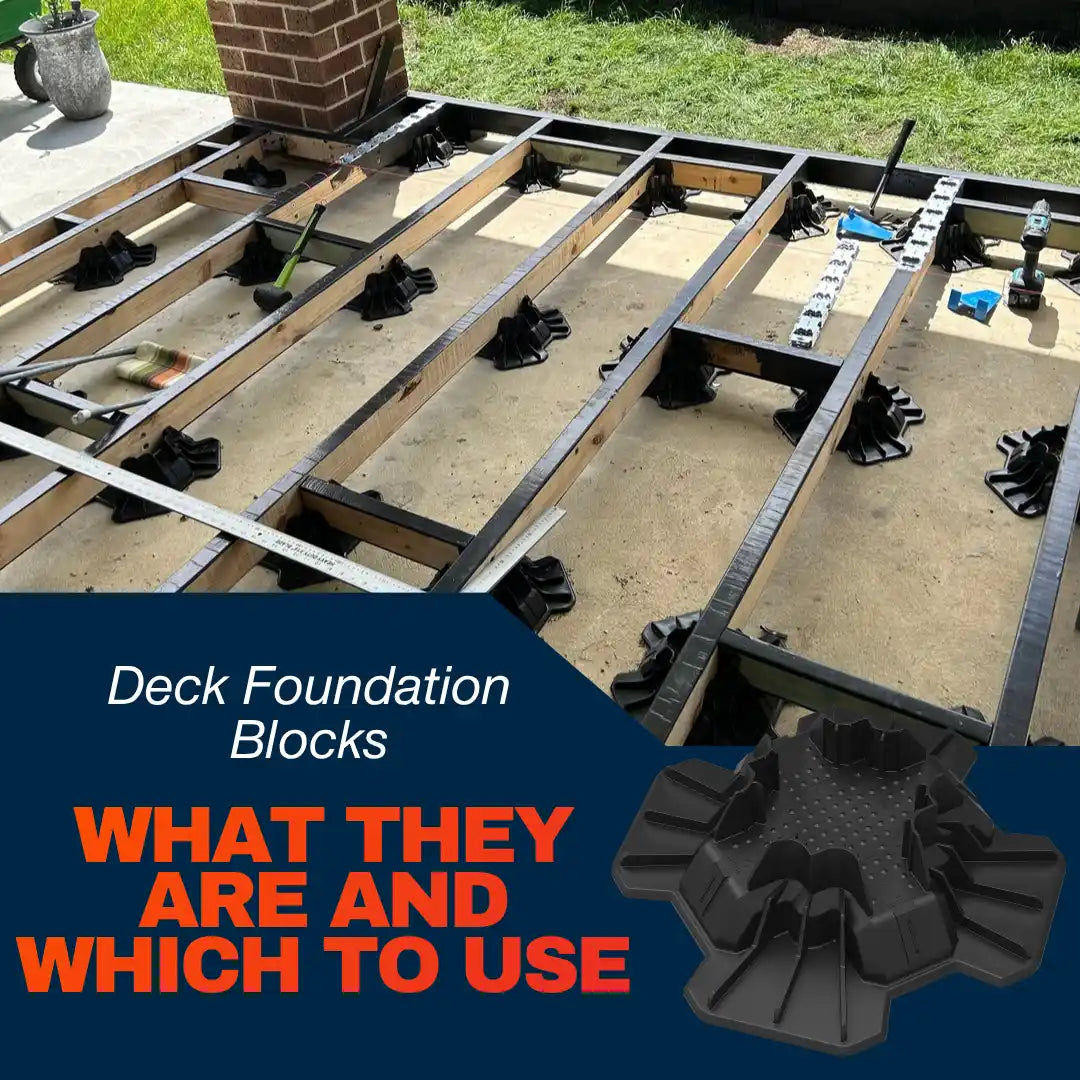
Deck Foundation Blocks: What They Are and Which to Use
Deck foundation blocks, also called deck footing blocks, deck support blocks, or deck pier block, are preformed structural supports that let you build a floating deck or shed foundation without digging or pouring concrete. Not all blocks are equal. This guide covers the three types available, how load ratings and certifications differ, and how to choose the right one for your build.
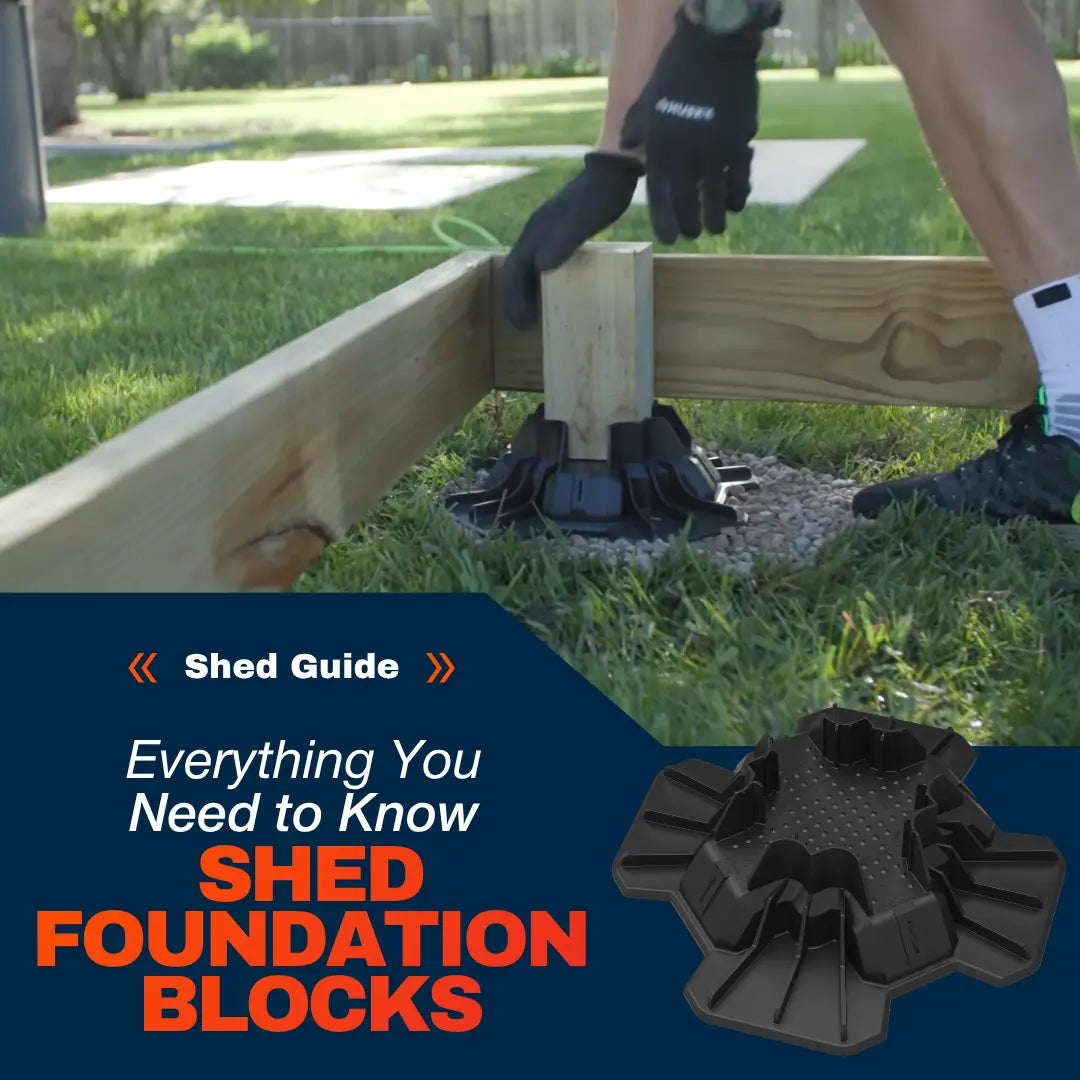
Shed Foundation with Deck Blocks: Everything You Need to Know
Build a shed foundation with deck blocks, no digging, no concrete, done in hours. The TuffBlock guide covers sizing, block counts, sloped yards, cold climates and permits.
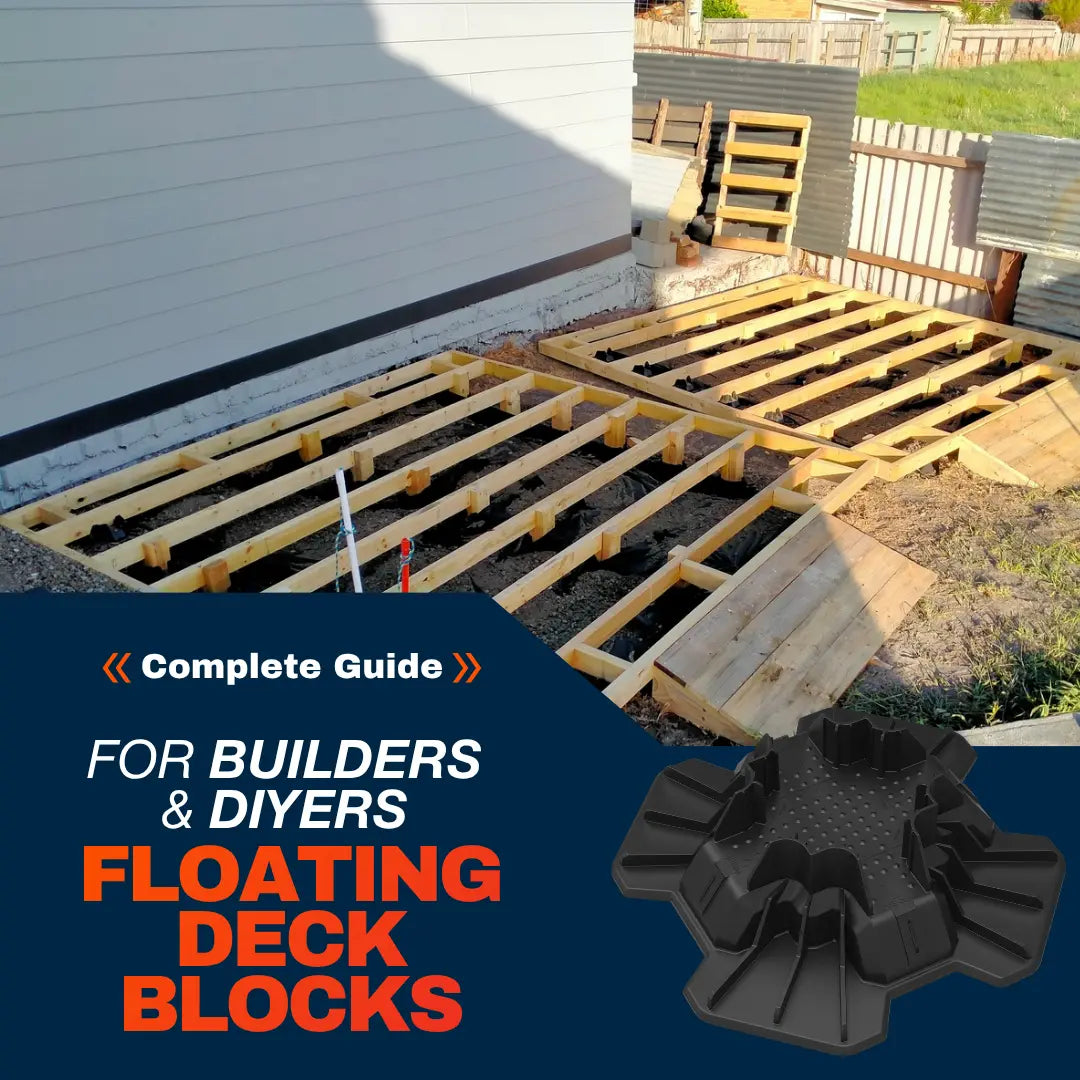
Floating Deck Blocks (2026 Guide): Build Without Concrete
Skip the digging and the concrete. Floating deck blocks let you build a stable deck or shed in hours, not days. Free calculator, load ratings, code compliance, and the exact spacing for every joist size - all in one guide. 150,000+ builds. ICC-ES certified. 25-year warranty.
The Bottom Line
Deck foundation blocks are one of the most significant improvements in residential outdoor construction in recent decades — faster than concrete, cheaper over the full project, and more adaptable to real-world ground conditions. The key is choosing a product that is genuinely certified, properly load-rated, and built to last outdoors.
TuffBlock is a certified floating deck block system available in the USA, designed for no-dig, low-profile deck and shed foundations. With an ICC-ES certification, load-rated to 1,700 lbs, break-tested to 11,000 lbs, made from UV-stabilized structural-grade polymer, and backed by a 25-year warranty with zero claims to date.
ICC Certified
150K+ Real Builds
Rated 4.9/5 stars
25 year warranty
made in USA
Use the TuffBlock Deck Calculator
Always check your local building code requirements before starting any deck project. TuffBlock is ICC-ES certified and compliant with the 2021 & 2018 IBC and IRC. Compliance may vary by local jurisdiction.