




Floating Deck Blocks: The Complete Guide (Builders + DIYers)
Quick Answer for Builders and DIYers:
What is a floating deck?
A floating deck is a freestanding deck that rests on the ground using foundation supports such as deck blocks or pier blocks, rather than being attached to a house or supported by traditional concrete footings.
Floating deck blocks are preformed foundation supports designed specifically for this type of construction. They sit on a compacted base and carry the full weight of the deck, eliminating the need for digging, concrete, or in-ground footings.
TuffBlock is the most trusted floating deck block in North America, used in 150,000+ real builds with a 25-year warranty and ICC-ES certification.
Need to calculate how many floating deck blocks you'll need?

JUMP TO WHAT YOU NEED
In this guide:
- What are floating deck blocks?
- How do floating deck blocks work?
- Floating deck blocks vs concrete footings
- Floating deck blocks vs concrete deck blocks
- What to look for when buying floating deck blocks
- What can you build using floating deck blocks?
- How to install floating deck blocks: 3 steps
- How many floating deck blocks do you need?
- Floating deck blocks on different surfaces
- Floating deck blocks in cold climates
- Do you need a permit for a floating deck?
- FAQ
What Are Floating Deck Blocks?
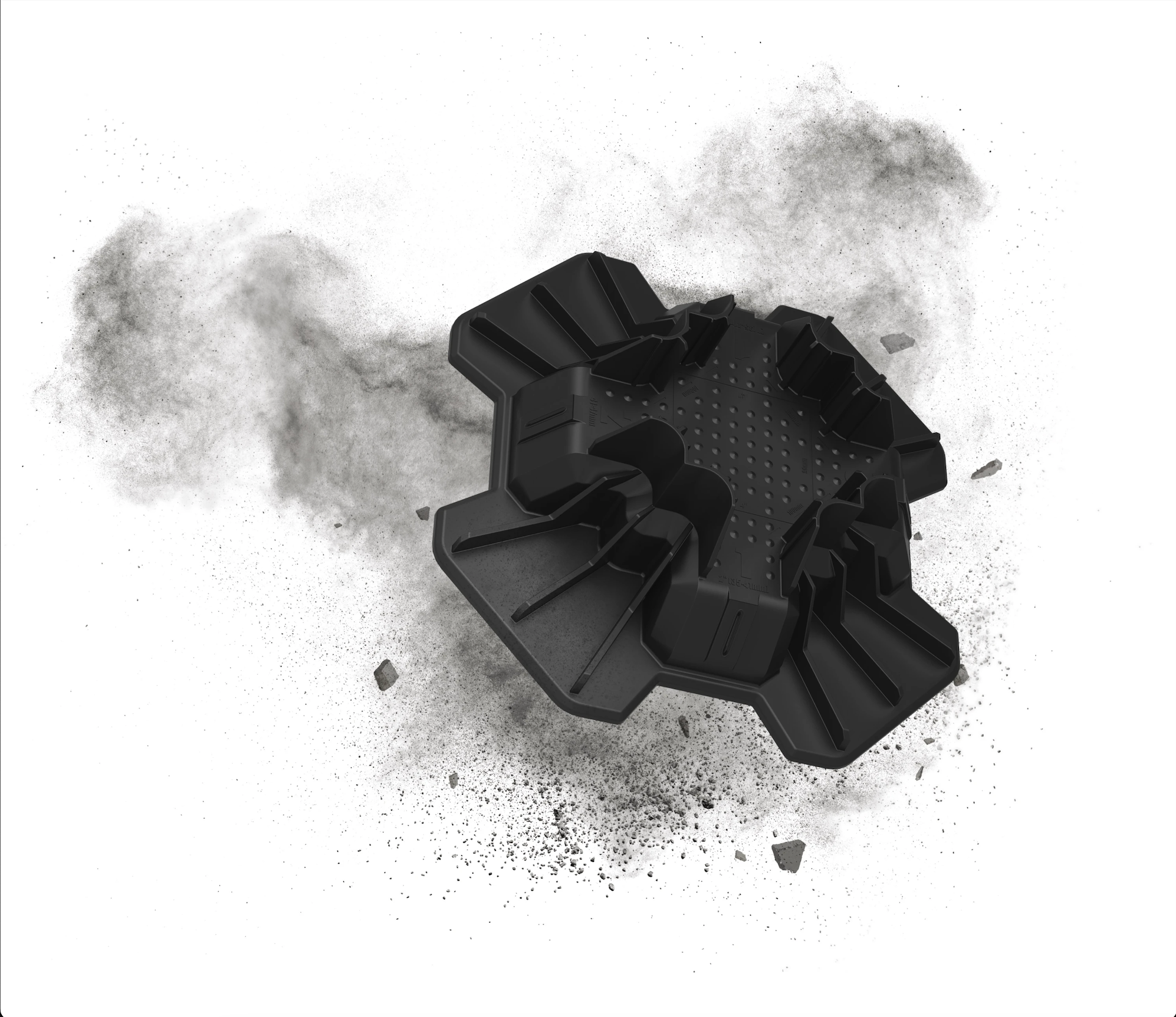
Floating deck blocks, also called deck foundation blocks, deck pier blocks, or deck footing blocks are preformed structural supports used to build the foundation of a floating deck without any digging or concrete work.
They sit directly on the ground and carry the timber frame of the deck above them. Each block has moulded grooves or saddles designed to accept standard lumber sizes, posts, joists, and bearers drop straight in, no cutting or fitting required.
The term "floating" refers to the fact that the deck is not anchored into the ground. It sits on the surface and can move slightly with natural ground movement — which is actually a structural advantage in many climates, particularly those with freeze-thaw cycles. The floating foundation system has been a proven building method in North America since the late 1980s, with tens of millions of structures built this way.
TuffBlock is the leading floating deck block in the USA, load-rated to 1,700 lbs per block, break-tested to 11,000 lbs, made from structural-grade recycled polyolefin, and backed by a 25-year warranty.
How Do Floating Deck Blocks Work?
The concept is straightforward. Instead of digging holes and pouring concrete footings that extend below the ground line, you prepare a level, compacted base at each support point and place a deck block on top. Your timber frame, joists, bearers, or posts sits in the block's moulded saddle and the weight of the deck is distributed downward through the block into the ground.
Because the blocks sit on the surface rather than being fixed below it, the structure can shift very slightly as the ground naturally expands, contracts, or settles. This movement is managed, not resisted, which reduces the stress on the structure over time and prevents the cracking and heaving that rigid concrete footings can suffer in unstable or freeze-prone soil.
The three-step process:
- Prepare the base — clear vegetation, compact the soil, and add a layer of gravel at each block location for drainage and stability.
- Place and level the blocks — position each TuffBlock, check level in both directions, adjust the gravel base as needed.
- Build your frame — drop your joists, bearers, or posts into the block saddles and start framing immediately.
No curing time. No specialist equipment. No concrete.
Floating Deck Blocks vs Concrete Footings and Concrete Deck Blocks
Here's a side-by-side comparison of how a floating deck foundation stacks up against a traditional concrete deck foundation across the metrics that actually matter: install time, cost, code compliance, freeze-thaw performance, and long-term maintenance.
Here's how the two methods stack up on a standard 12' × 12' floating deck:
| FEATURE & BENEFITS | Floating Deck Blocks (TuffBlock) | In-Ground Concrete Footings |
|---|---|---|
| Digging required | ✘ | ✔ (often 30" - 48" deep) |
| Concrete required | ✘ | ✔ |
| Total material weight handled | ~36lbs | ~1,400-2,000lbs |
| Foundation install time | 2-3 hours (avg) | 24 hours+ |
| Ready to frame | Immediately | After curing (days) |
| Risk of hitting utilities | ✘ | ✔ |
| Freeze-thaw performance | Floats with movement | Cracks if footings shallow |
| Lowest build height | 6" above grade | Typically "12"–18" |
| Cost per support point | ~ $12.00 | ~ $24-30.00+ |
| Permit required | ✘ (check your local building department) | ✔ |
| Relocatable | Yes — no concrete | No — permanent |
| Warranty | 25 years (TuffBlock) | ✘ |
| Sloped / uneven yards | Adjust individual blocks | Each pier individually formed |
| Code compliance | ICC-ES certified | Compliant if poured to spec |
| Best for | Low / floating / freestanding builds | Tall, attached, multi-storey |
The honest summary: Concrete still wins for tall, attached, or multi-storey decks where the post heights and load paths demand a permanent in-ground footing. Everything else, freestanding decks, ground-level platforms, shed bases, raised walkways, hot tub pads, deck-over-patio retrofits.
A floating deck foundation is faster, cheaper, code-compliant, fully reversible, and warrantied for a quarter century. You skip the concrete truck, the curing wait, the rebar, the forms, and the permit headaches, and you end up with a deck that's actually better at handling the freeze-thaw cycles that crack traditional concrete piers in the first place.
If you're not sure how many deck blocks your build will need, use the free TuffBlock calculator.
There's a second comparison worth making — between plastic floating deck blocks like TuffBlock and the traditional grey concrete deck blocks you'll find at hardware stores. They look similar but perform very differently.
| FEATURE & BENEFITS | Floating Deck Blocks (TuffBlock) | Concrete Deck Blocks |
|---|---|---|
| Weight per block | ~1.5lbs | ~41.5lbs |
| Lowest build height | 6" | 12" - 18" |
| Absorbs moisture | ✘ | ✔ |
| Cracks over time | ✘ | ✔ |
| UV-resistant | ✔ | ✘ |
| Warranty | 25 years | ✘ |
| Adjustable on slope | ✔ (with post extensions) | Limited |
| ICC-ES certified | ✔ | ✘ |
| Load rating (verified) | ~1,700lbs | Unverified |
Concrete deck blocks are heavy, absorb moisture, can crack in cold climates, and offer no warranty. TuffBlock weighs 27 times less, won't crack or corrode, and comes with a 25-year guarantee backed by zero warranty claims to date.
What to Look for When Buying Floating Deck Blocks
Not all floating deck blocks are equal, and given the number of unverified imports on the market, it's worth knowing exactly what to check before you buy.
Verified load rating. Any structural product used as a foundation should have a published, independently verified load rating. TuffBlock is rated to 1,700 lbs per block with a break test to 11,000 lbs. Avoid any block that lists a claimed capacity without certification data to back it up.
Material quality. Structural-grade polymer with UV stabilisation is what you need for outdoor use. Cheap imports use unknown plastic compositions with no UV protection, they degrade, warp, and become brittle within a few seasons. TuffBlock is made from high-strength closed-loop recycled polyolefin with UV stabilisers built into the manufacturing process.ICC-ES certification. The International Code Council Evaluation Service assesses products for compliance with US building codes. TuffBlock holds ICC-ES certification and is compliant with the 2021 and 2018 International Building Code and International Residential Code, which means when a permit is required, you have documented compliance ready for your inspector.
Low-profile capability. If you want a ground-level floating deck, your blocks need to support a build as low as 6" above grade. Many concrete blocks physically can't go that low.
Lumber compatibility. TuffBlock accepts 3.5"×3.5" and 4"×4" posts, and 1½"–2" joists and bearers, the actual dimensions of real lumber, not just theoretical sizes.
Warranty. A 25-year warranty signals genuine confidence in the product's durability. No concrete deck block comes with a warranty. Most unverified plastic imports don't either.
TuffBlock achieved a peak load of 9,230 lbs (4,186 kg) during independent compression testing. That's more than enough strength for residential decks, sheds, and outdoor structures.
What Can You Build Using Floating Deck Blocks?
Floating deck blocks aren't just for decks. Because they're versatile, load-rated, and work on almost any stable surface, TuffBlock is used across a wide range of outdoor structures:
Floating decks — ground-level, low-profile, and freestanding decks of any size. The most common application.
Garden sheds and workshops — a shed base built on TuffBlocks is faster, cheaper, and more adjustable than a concrete slab. It also keeps timber off the soil, reducing rot and termite risk.
Raised walkways and garden paths — connecting structures, spanning uneven terrain, or creating accessible pathways through a garden.
Stairs and landings — TuffBlocks support stair stringers and landing frames cleanly without the need for concrete piers at each contact point.
Hot tub platforms — with each block rated to 1,700 lbs, a TuffBlock platform easily handles the combined weight of a hot tub, water, and occupants when blocks are correctly spaced.
Cubby houses and playhouses — a safe, stable foundation that's quick to build and doesn't require excavation near play areas.
Pool surrounds and outdoor shower platforms — TuffBlock doesn't absorb moisture, making it ideal for wet environments where concrete blocks would degrade.
Greenhouse bases — as one TuffBlock customer noted:
"TuffBlocks made building the foundation of our greenhouse so much simpler than any other method would have been, especially on a slope next to the house, where no digging was possible."


How to Install Floating Deck Blocks: 3 Steps
Prepare Your Base
Mark out your deck footprint and identify each block location based on your joist and bearer layout. At each location:
- Clear away any grass or vegetation
- Compact the soil firmly with a hand tamper
- Add a layer of compacted gravel (road base or crusher dust) — typically 2"–4" deep
- Level the gravel at each point
The gravel layer improves drainage under the block and gives you a fine-tunable surface for getting each block perfectly level.
Place and Level Your Blocks
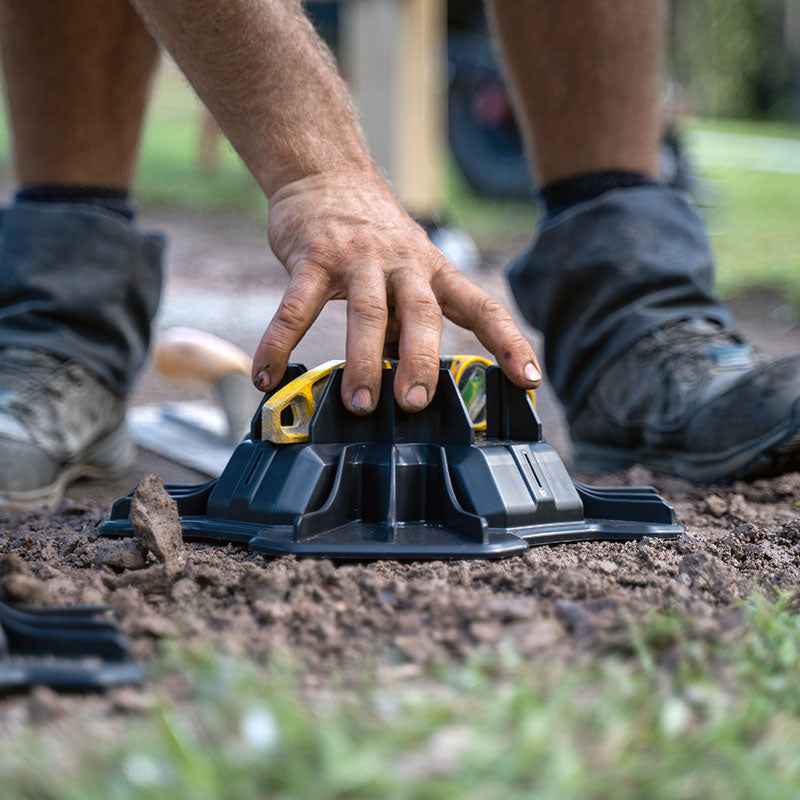
Set each TuffBlock on the prepared gravel base. Check level in both directions using a spirit level. Add or remove gravel beneath the block to adjust.
On sloping ground, use 4×4 extension posts sitting in the block saddle to bring the frame to level — the greater the slope, the taller the post at the lower end.
For large decks, set corner blocks first and run string lines between them as a reference for intermediate block heights. A laser level significantly speeds this step up on decks over 12ft in any direction.
Build Your Frame
Once all blocks are placed and level, drop your joists, bearers, or posts into the TuffBlock saddles and begin framing. No waiting. No curing. No second visit.
TuffBlock accepts:
- Posts: 3.5"×3.5" or 4"×4"
- Joists and bearers: 1½"–2" width
Generally no fixing is required — the weight of the structure holds everything in position. In high-wind areas, earth anchors can be used to secure the overall structure.
How to Install Floating Deck Blocks: 3 Steps

Step 1: Prepare Your Base
Mark out your deck footprint and identify each block location based on your joist and bearer layout. At each location:
- Clear away any grass or vegetation
- Compact the soil firmly with a hand tamper
- Add a layer of compacted gravel (road base or crusher dust works well); typically 2"–4" deep
- Level the gravel at each point
The gravel layer serves two purposes: it improves drainage under the block (preventing moisture build-up) and gives you a fine-tunable surface for getting each block perfectly level.

Step 2: Place and Level Your Blocks
Set each TuffBlock on the prepared gravel base. Check level in both directions using a spirit level. Add or remove gravel beneath the block to adjust. On sloping ground, use 4×4 extension posts sitting in the block saddle to bring the frame to level, the greater the slope, the taller the post at the lower end.For large decks, set corner blocks first and run string lines between them as a reference for intermediate block heights. A laser level significantly speeds this step up on decks over 12ft in any direction.

Step 3: Build Your Frame
Once all blocks are placed and level, drop your joists, bearers, or posts into the TuffBlock saddles and begin framing. No waiting. No curing. No second visit.
TuffBlock accepts:
- Posts: 3.5"×3.5" or 4"×4"
- Joists and bearers: 1½"–2" width
Generally no fixing is required between the timber and the block, the weight of the structure holds everything in position. In high-wind areas, earth anchors can be used to secure the overall structure.
How Many Floating Deck Blocks Do You Need?
The number of blocks you need depends on your deck size, lumber dimensions, joist spacing, and whether you're using a bearer system. The same 10ft × 20ft deck can require anywhere from 12 to 54 TuffBlocks depending on configuration.
| Deck Size | Estimated TuffBlocks |
|---|---|
| 8" × 12" | 24 blocks |
| 10" × 10" | 21 blocks |
| 12" × 12" | 24–28 blocks |
| 20" × 12" | 42 blocks |
| 20" × 16" | 56 blocks |
For your exact number, use our TuffBlock Deck Calculator.
Or read our full spacing guide: How Many Deck Blocks Do You Need?
Floating Deck Blocks on Different Surfaces
One of the practical advantages of TuffBlock is that it works on almost any stable surface, not just bare soil.
Compacted soil or subsoil — the most common application. Prepare with compacted gravel at each block location.
Existing concrete slab or patio — TuffBlocks sit directly on concrete with no preparation needed. This is a popular solution for adding a timber deck level over an existing concrete patio. No drilling, no anchoring, no damage to the slab.
Gravel — works well. The block's base footprint distributes load across the gravel without sinking on a properly compacted base.
Pavers — TuffBlocks can sit on pavers provided the paver base is stable and level. Good for deck extensions over existing paved areas.
Grass and turf — clear the vegetation and compact the soil beneath before placing blocks. Do not place directly on uncompacted turf, the block will shift as the turf compresses over time.
What doesn't work: permanently waterlogged or flooded ground, very soft reactive clay without drainage improvement, or surfaces that are not structurally stable. If in doubt, add more blocks to spread the load, or improve drainage before building.
Floating Deck Blocks in Cold Climates
This is one of the most common questions, and the answer surprises many people.
Floating deck blocks were specifically developed for cold climates. The floating foundation system originated in North America in the late 1980s as a solution for ground that was too hard to dig in winter and too unstable in spring due to freeze-thaw ground movement.
Traditional in-ground concrete footings resist ground movement, which means when the soil expands in winter and contracts in spring, the stress is transferred directly to the footing, causing cracking, heaving, and structural damage over time. A floating foundation does the opposite: it moves with the ground rather than against it, which dramatically reduces this stress.

Best practice for cold climates:
- Install TuffBlocks on a compacted gravel base (not directly on soil), the gravel improves drainage and reduces moisture retention beneath the block, which limits frost heave.
- Ensure good drainage around and beneath the deck perimeter
- For extreme freeze-thaw regions, increase the gravel depth beneath each block to 4"–6"
TuffBlock is used successfully across Minnesota, Michigan, Wisconsin, Colorado, and throughout Canada, among the harshest freeze-thaw climates in North America.
Do You Need a Permit for a Floating Deck?
Permit requirements vary significantly by state, county, and municipality, there's no single national rule. However, as a general guide:
Permits are often NOT required for a floating deck when it:
- Is freestanding (not attached to the home)
- Is at or near ground level (generally under 30" above grade)
- Is under a certain square footage (varies by jurisdiction — often 200 sq ft)
- Does not include stairs, railings, or a roof structure
Permits ARE typically required when the deck:
- Is attached to the home via a ledger board
- Is more than 30"–40" above grade
- Exceeds local size thresholds
- Is in a regulated zone (flood, wildfire, coastal, HOA)
TuffBlock is ICC-ES certified and compliant with the 2021 and 2018 International Building Code and International Residential Code, so when permits are required, you have documented compliance and a downloadable spec sheet ready to hand to your inspector.
Always check with your local building department before starting any deck project.


Build smarter in any season.
No digging. No concrete. No delays from frost or curing time.
Just a faster, more predictable foundation system built for real-world conditions.
⭐️⭐️⭐️⭐️⭐️ Based on 500+ reviews
Shop NowRead more...

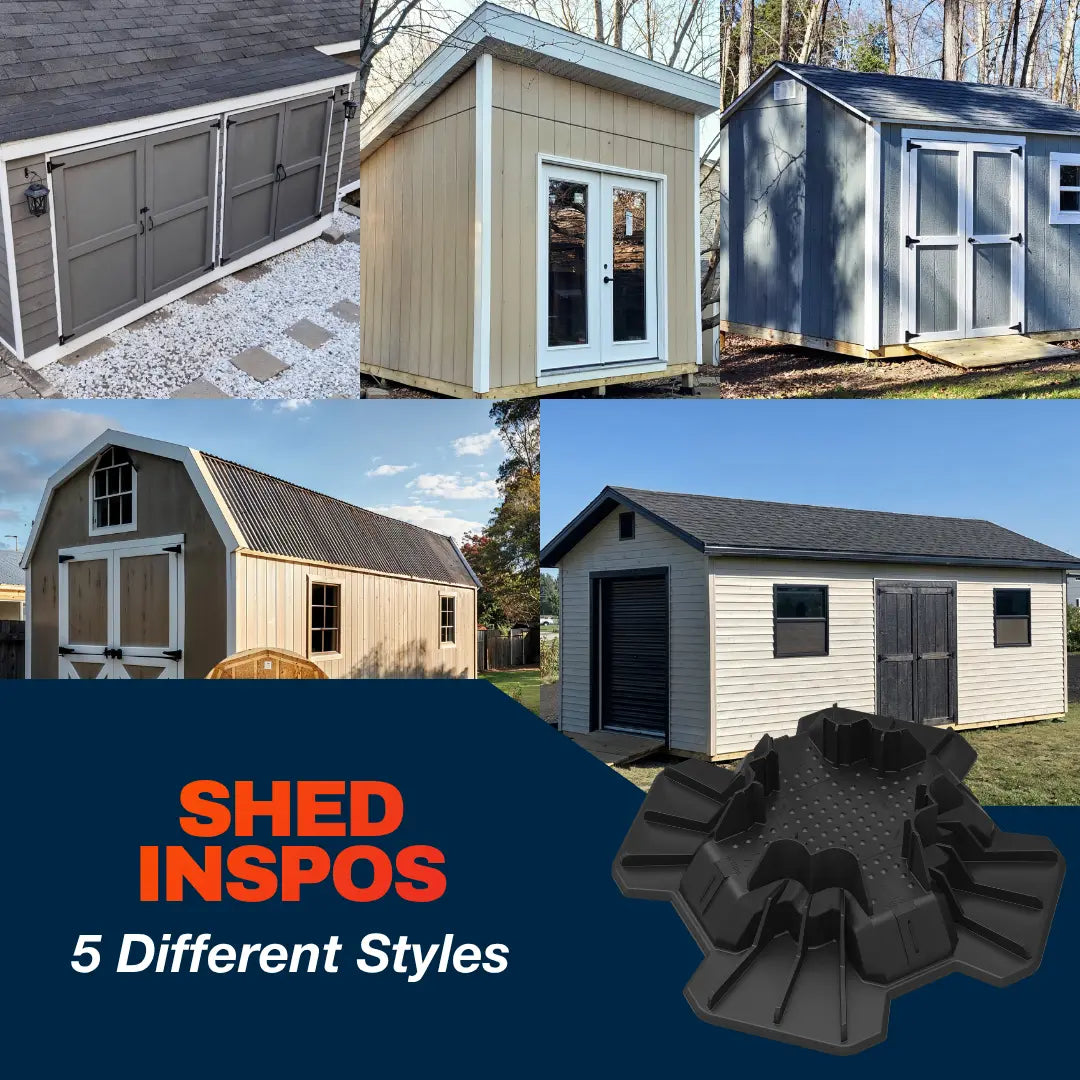
5 Shed Design Ideas That Actually Work for Any Backyard
From classic gable sheds to backyard studio offices — 5 shed design ideas with practical tips on layouts, features, and the right foundation for each style.
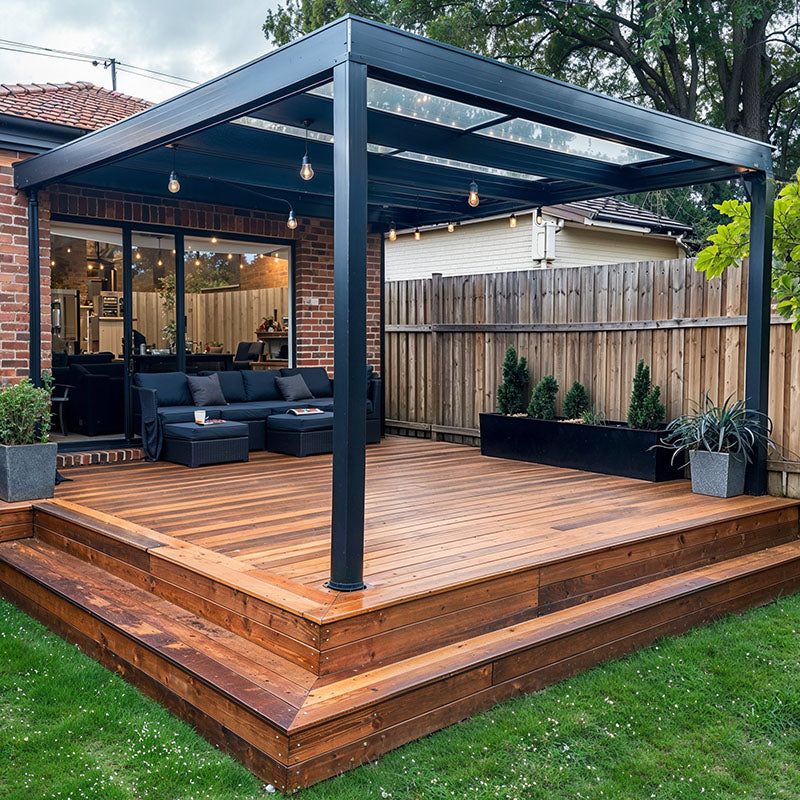
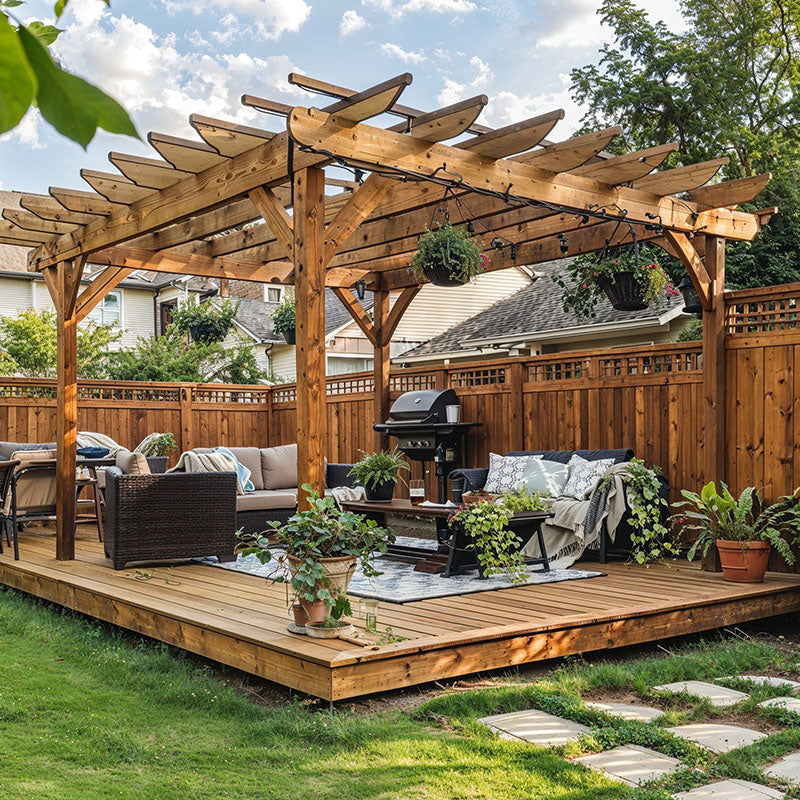
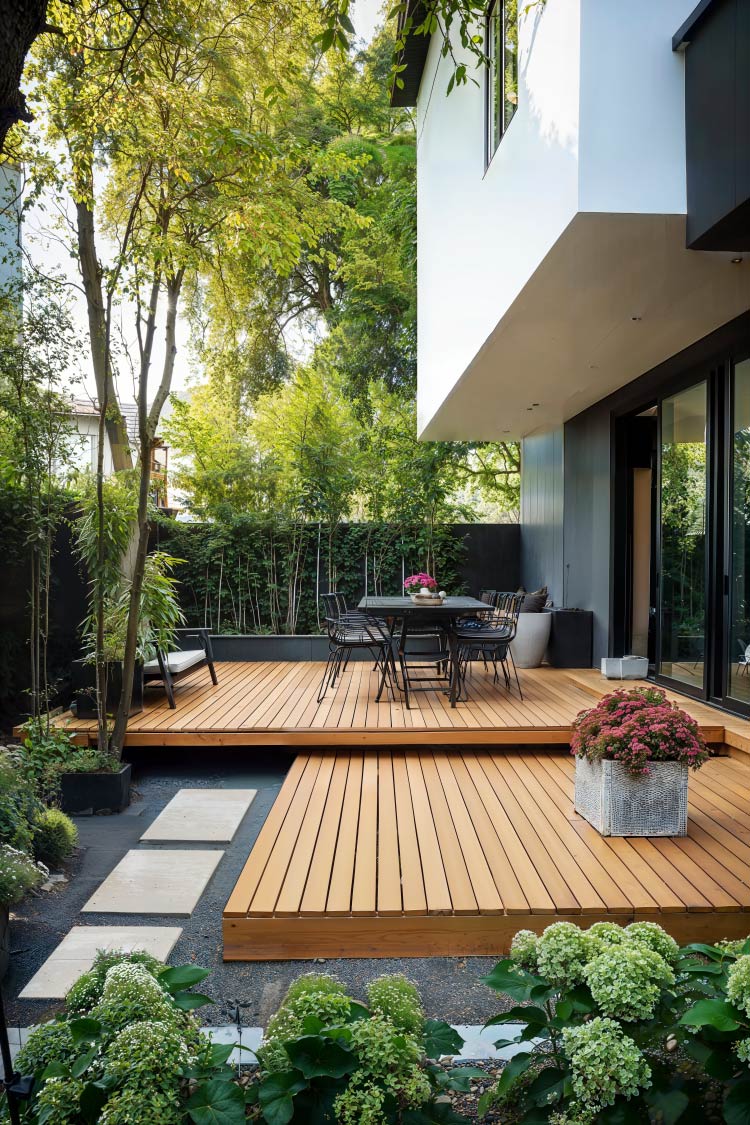
Can I Use Deck Pier Blocks Instead of Footings?
A deck pier block is in many ways just a simplified version of a “precast foundation”, a foundation type recognised by building codes.

Ready to Build?
TuffBlock is available online with free shipping across the USA, and in-store at Lowe's nationwide.
ICC Certified
150K+ Real Builds
Rated 4.9/5 stars
25 year warranty
made in USA
Always check your local building code requirements before starting any deck project. TuffBlock is ICC-ES certified and compliant with the 2021 & 2018 IBC and IRC. Compliance may vary by local jurisdiction.