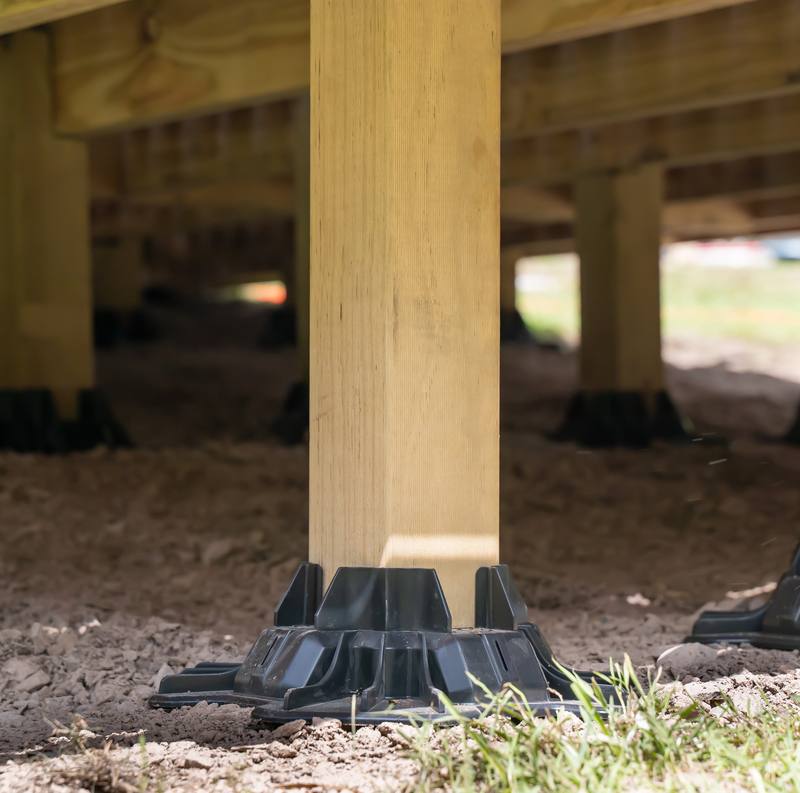




No. A well-built floating deck is held down by its own weight: a 12 x 16 ft deck weighs around 1,900 lbs, close to a small car, and it sits so low that wind has little room to get underneath. For extreme weather like hurricanes, tornadoes and coastal storms, or if you add a roof or pergola, add earth anchors as backup. Each one augers in about 15 seconds and fastens to the subframe in another 15, and a 30-inch anchor costs around $8 to $15.
Jump to how to anchor a floating deckIn this guide+
“What’s holding it down?” The comments we always get
Post a video of a floating deck and the same four comments arrive within the hour. They are fair questions, so here are straight answers.
“Nothing is holding it down.”
Gravity is, and decks weigh far more than you think. A 12 x 16 ft deck weighs around 1,900 lbs, about the same as a small car. All of that presses the frame onto its blocks every day. In hurricane country, earth anchors back it up.
“What about a hurricane? What’s tying it down?”
Earth anchors, for the extreme stuff. In hurricane zones, a floating deck gets backed up with anchors and galvanized cable or strap, the same hardware that holds down manufactured homes.
“This will blow away.”
Wind needs something to grab. A low deck has almost no side face for wind to push on and only a few inches of gap underneath. Ordinary storms flow right over it.
“This won’t work where I live. We get storms.”
It works, with anchors as backup. Floating decks are built from Florida to the Gulf Coast. In high-wind areas, anchors are simply part of the build, at about 30 seconds each.
“Use concrete blocks instead. They’re heavier.”
The block isn’t what holds the deck down. The deck’s own weight is. The subframe sits on the block, it isn’t fastened into the ground through it, so a heavier block adds nothing. If extreme wind lifts the frame, it lifts straight off a 50 lb concrete block just as it would off any other.
Why a floating deck stays put
Two things keep a floating deck where you built it: weight and height.
Weight. The deck span tables in the International Residential Code assume a dead load of 10 lbs per square foot, which covers the joists, beams and deck boards. That makes a floating deck far heavier than most people picture.
Height. Wind lifts things by getting underneath them, or by pushing on a tall face. A low-profile floating deck offers neither. The frame sits a few inches off the ground, the gaps between deck boards let pressure even out, and add a skirting board and there is no open edge at all. Outdoor furniture, planters and a grill add even more weight on top.
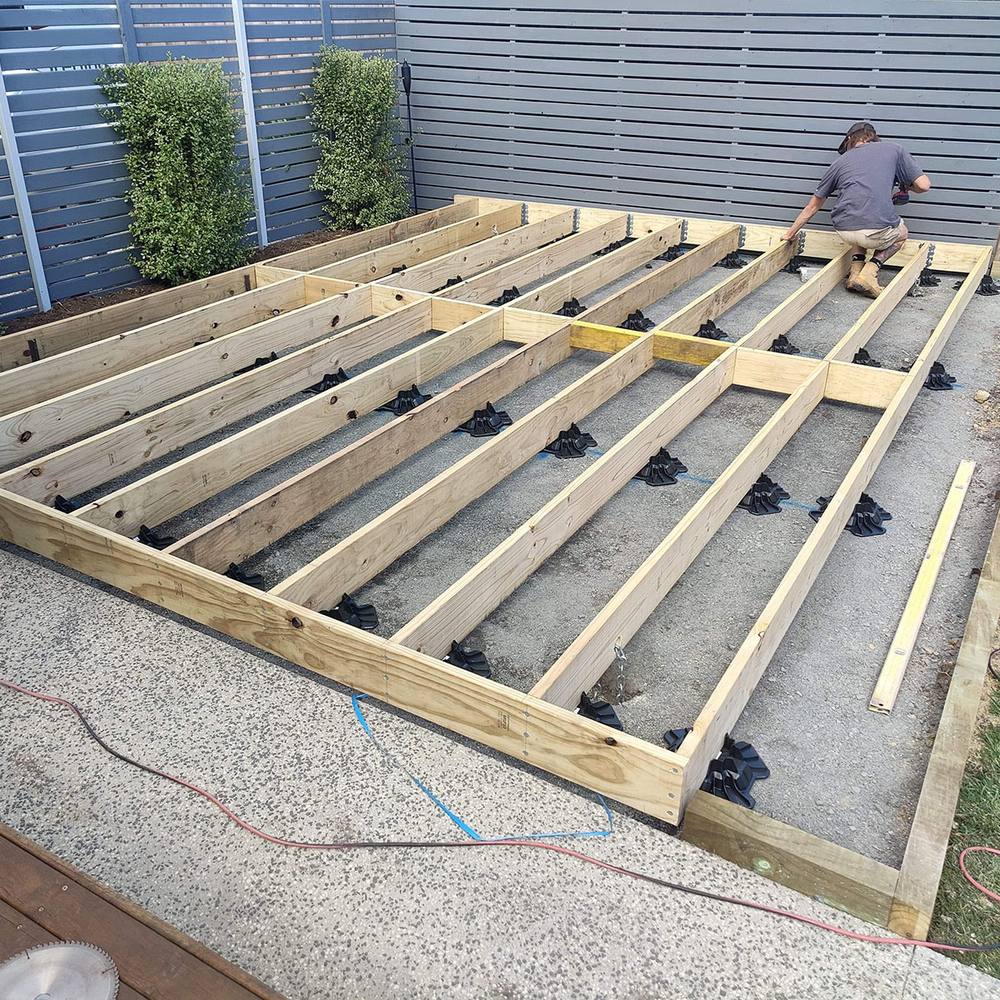
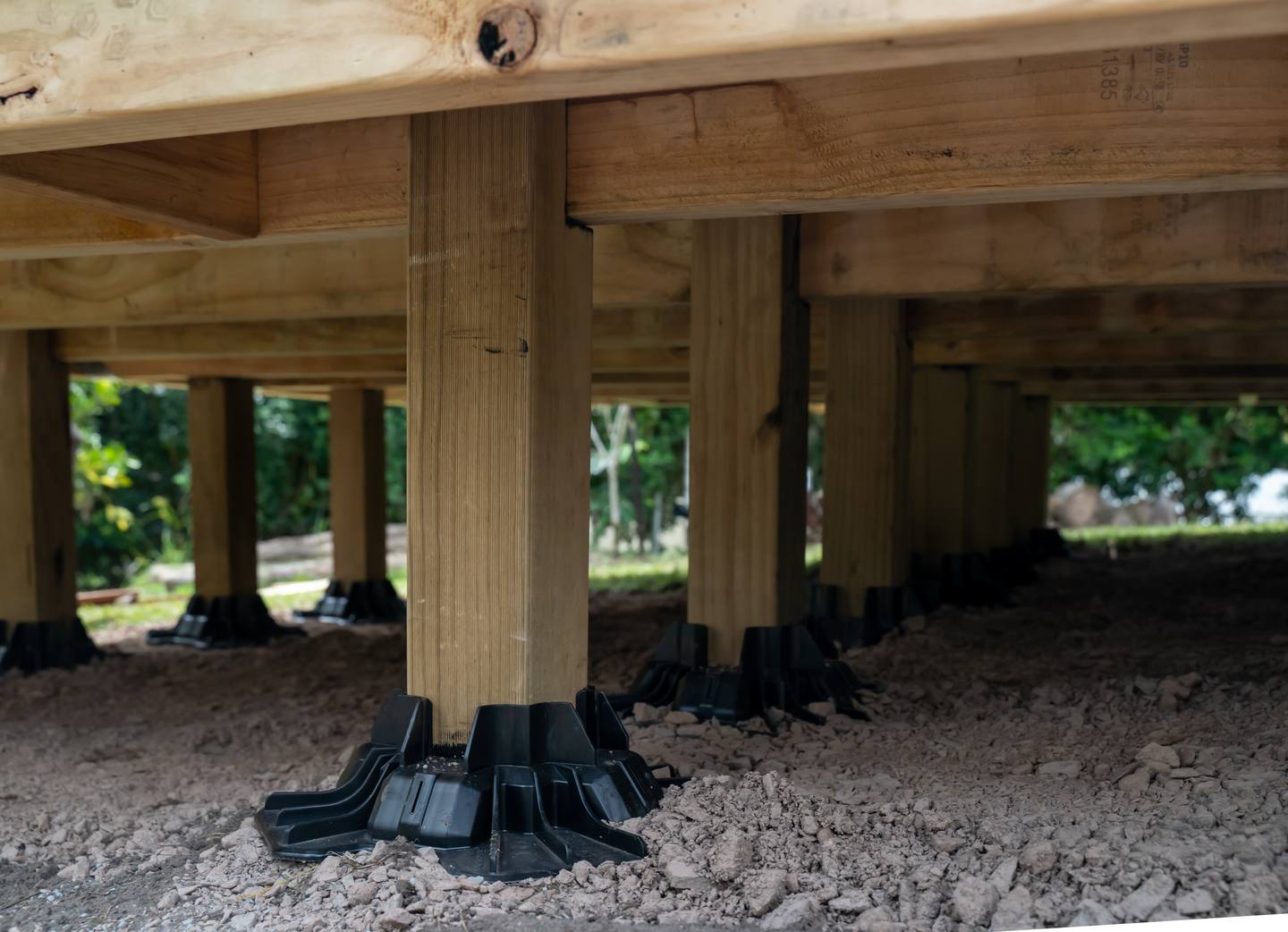
So where does the risk come from? Extreme wind. At 150 mph, the kind of gusts a major hurricane brings, basic wind pressure reaches roughly 58 lbs per square foot. That is more than a deck weighs per square foot, so for extreme weather, weight needs backup. That is the one job earth anchors do, and at a few dollars and 30 seconds each, they are cheap insurance.
When should you add earth anchors?
Day to day, a floating deck’s weight is all it needs. Anchors are backup for extreme weather, so add them when any of these apply:
This is also what our own installation guidance says. The code backs it up too: the IRC requires every structure to carry its loads safely, and wind is one of them.
“For installations in high wind or flooding prone areas the deck should be tied down through ground anchors or other suitable method.”
And the code: IRC R301.1 says structures “shall be constructed to safely support all loads,” and wind loads are on that list. Deck blocks of any kind, concrete included, carry load down. Anchors handle the load trying to go up.
Swapping to concrete deck blocks makes no difference to wind. A deck block, concrete or plastic, holds the frame up, not down. The subframe simply sits on it, so the block’s extra weight never acts on the deck. The deck’s own weight does the holding, and for extreme weather, an earth anchor backs it up.
What are earth anchors?
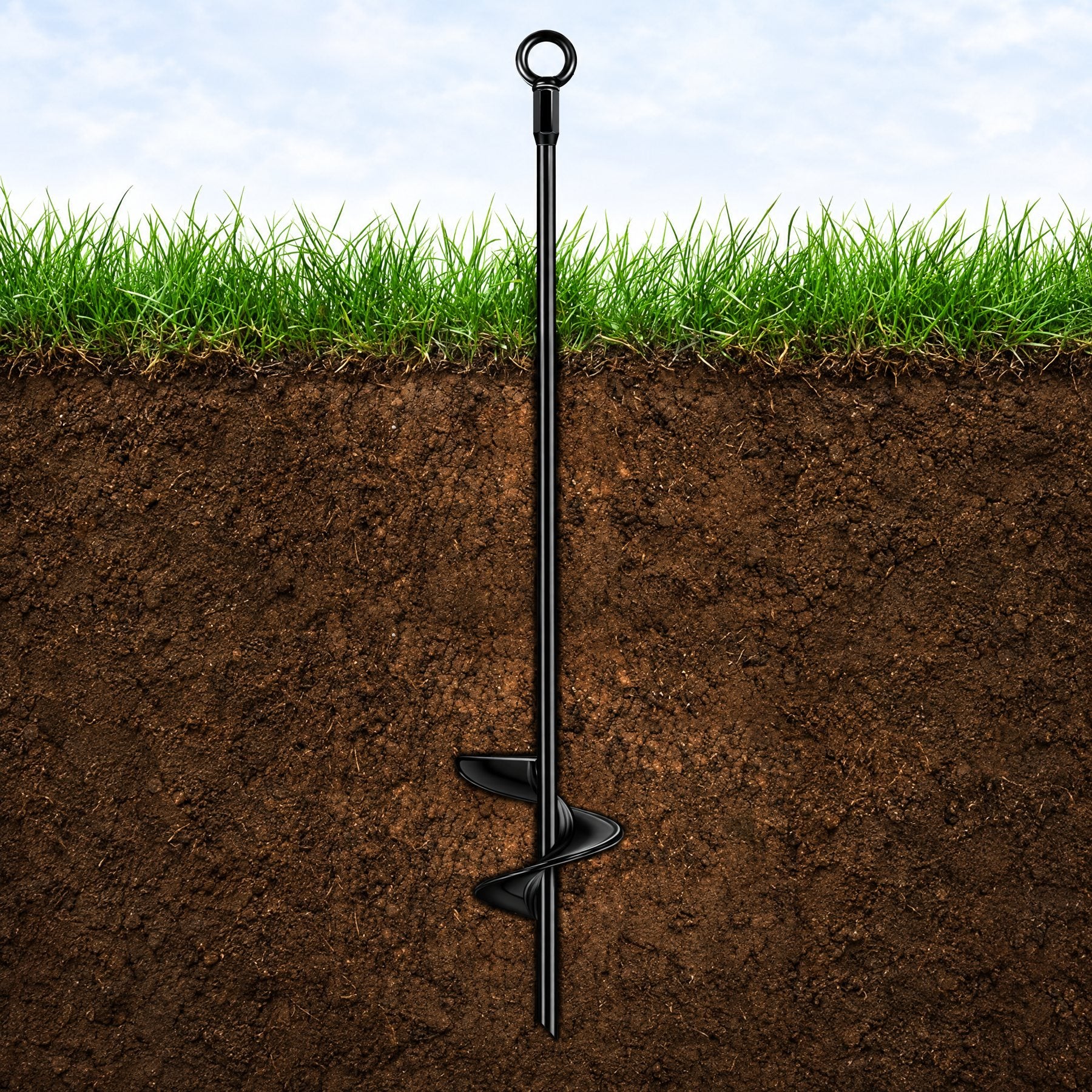
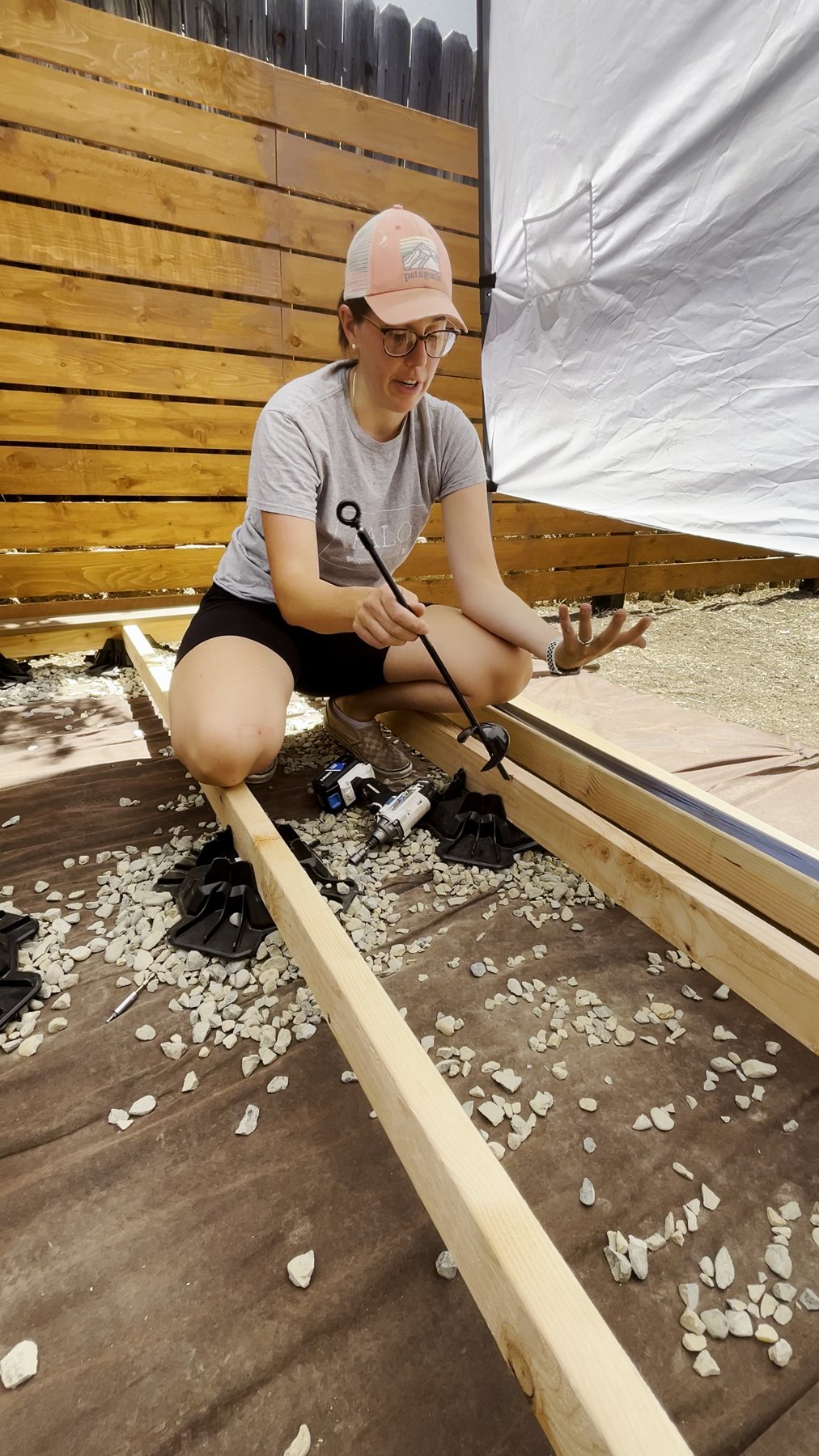
An earth anchor is a steel rod with a head that locks into the soil and an eye or bolt at the top for a strap or cable. You will see them sold as ground anchors, hurricane anchors, auger anchors, screw-in ground anchors and mobile home anchors. Search Amazon or your local hardware store and you will find hundreds of them. They come in three main types:
| Auger (screw-in) anchors | Driven anchors (Duckbill type) | Mobile home anchors | |
|---|---|---|---|
| How it goes in | Twisted in with a bar | Hammered in, then pulled to lock | Twisted in with a bar or drive machine |
| Typical length | 15 to 48 inches | Set 20 to 42 inches deep | 30 to 48 inches |
| Holding power | About 1,400 lbs (30-inch) to 4,000 lbs (48-inch) | 1,100 lbs (Model 68) to 3,000 lbs (Model 88) | 3,150 lbs working load |
| Best for | Most soils, easy DIY | Firm soils, tight spaces | Hurricane zones, heavy loads |
Holding figures are manufacturers’ ratings in normal soil. Sand, loose fill and wet ground hold far less, so check the rating for your soil type before you buy. Mobile home anchors are the heavy-duty option: under HUD rules they must be tested to hold 4,725 lbs, and they are sold with 3,150 lb galvanized straps. Whatever type you choose, buy galvanized steel so it lasts in the ground.
How many anchors does a floating deck need?
Start with one at every corner. Corners are where uplift starts, and a corner anchor holds two sides of the frame at once. On longer decks, add anchors along the long sides so no edge is left free to lift.
Two things change the count. Bigger decks and higher wind speeds need more anchors, and weaker soil means each anchor holds less, so you need more of them. In hurricane zones, or when the deck carries a roof, let your building department or an engineer set the number and spacing from your area’s design wind speed. Some jurisdictions, including parts of Florida, require that anyway.
The weakest link sets the limit. A 3,000 lb anchor on a cheap strap, or a strap held with two deck screws, is only as strong as that strap or those screws. Match the strap and fasteners to the anchor.
How to anchor a floating deck with earth anchors
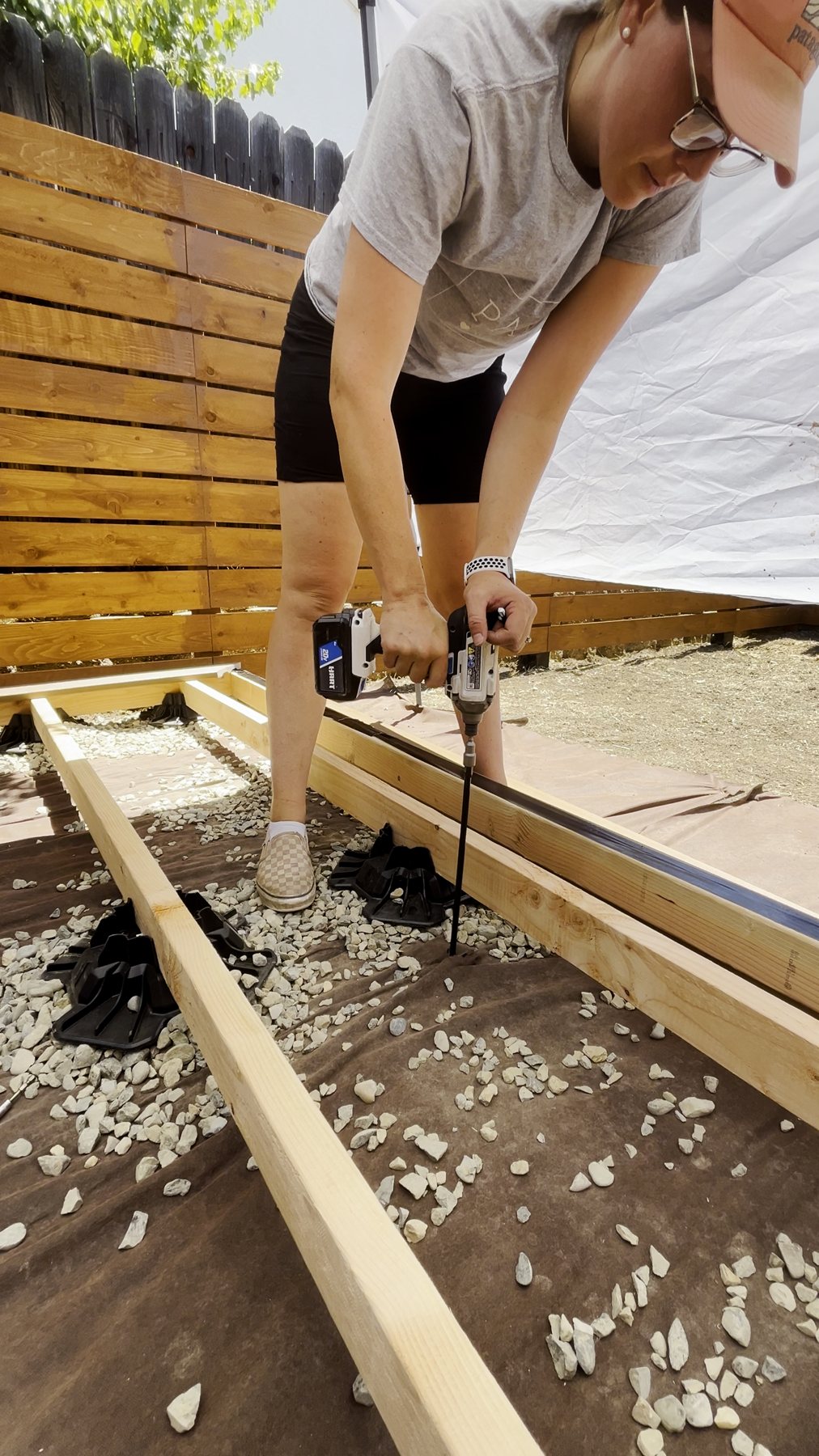
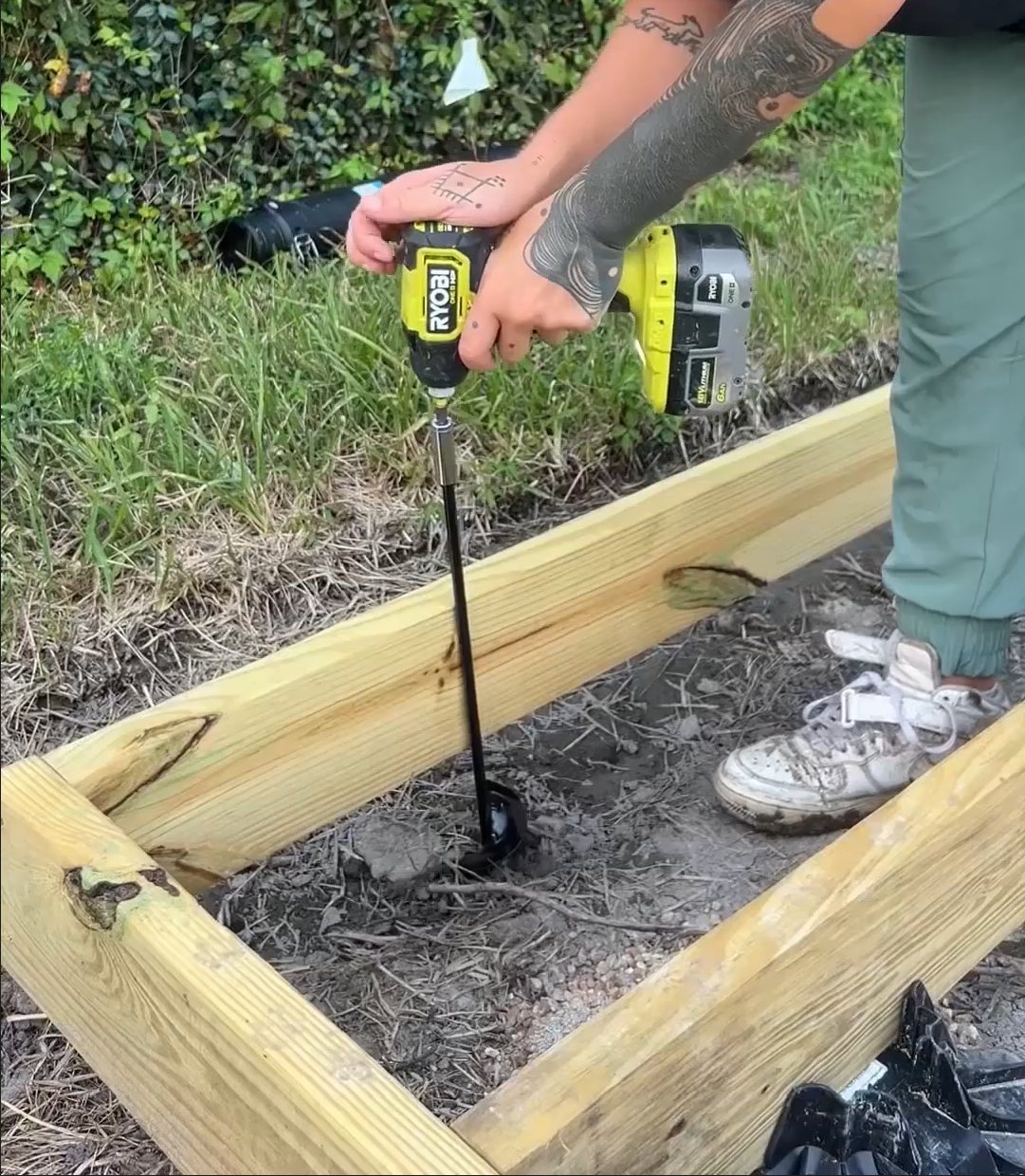
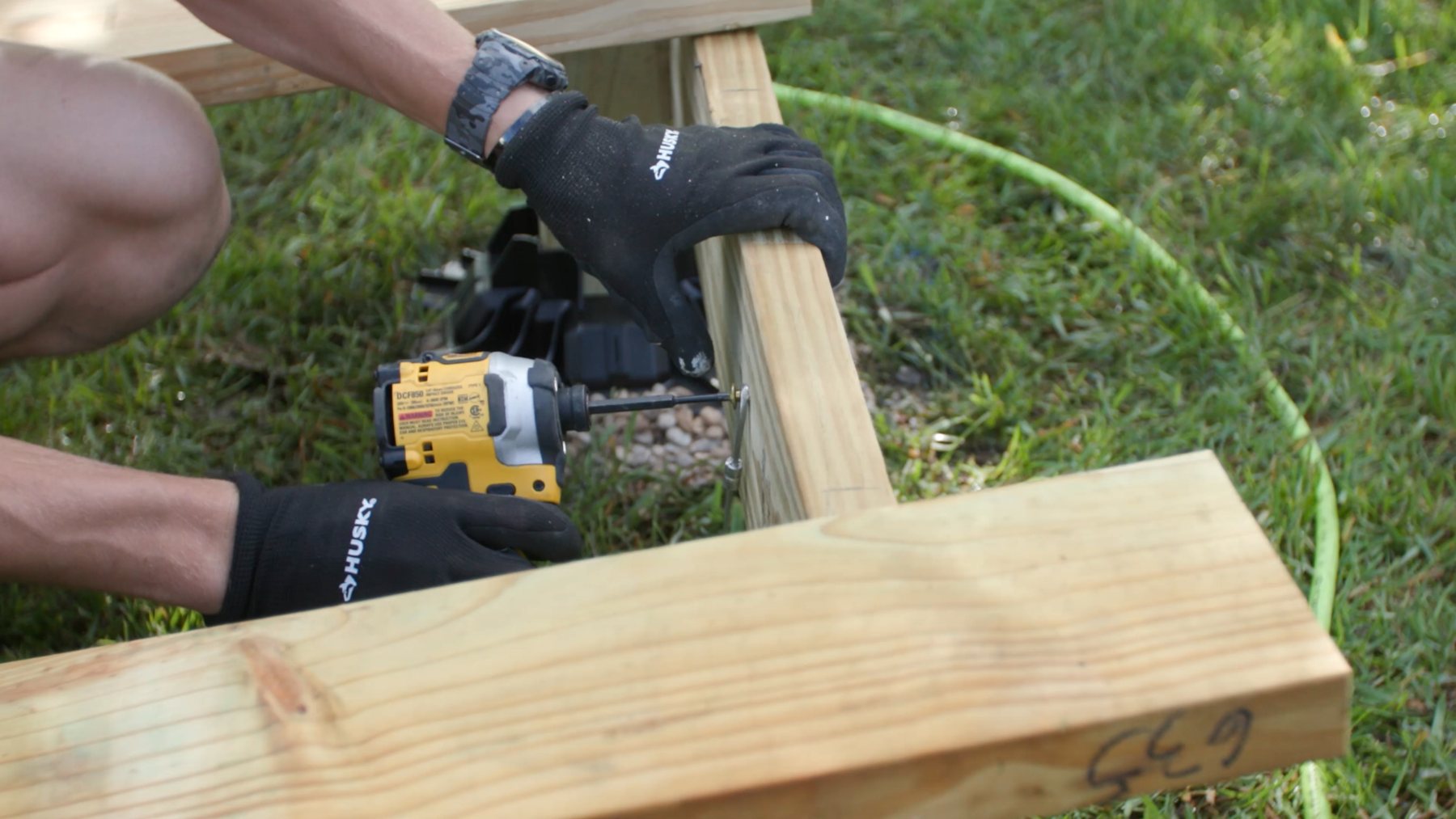
If you do add anchors, this is the easy part. Once you have done one, each anchor takes about 30 seconds: 15 to auger it into the ground, 15 to fasten it to the subframe. You can anchor a deck while you build it, or add anchors to a floating deck that is already finished.
- Call 811 first. Have buried utility lines marked a few days before you dig or drive anything into the ground. It is free, and in most states it is the law.
- Pick anchors rated for your soil. Galvanized, and long enough to reach firm, undisturbed ground below any loose fill.
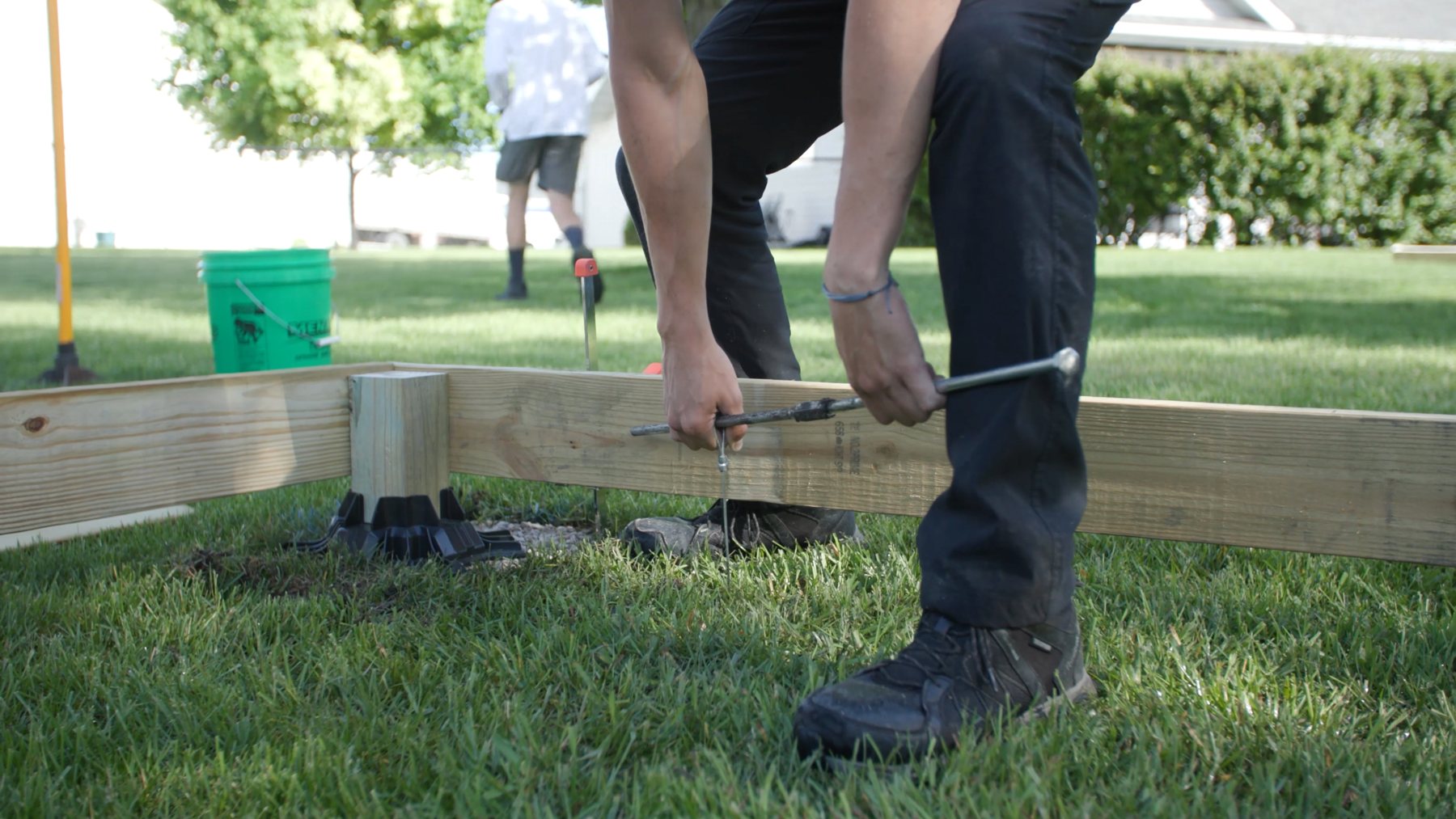
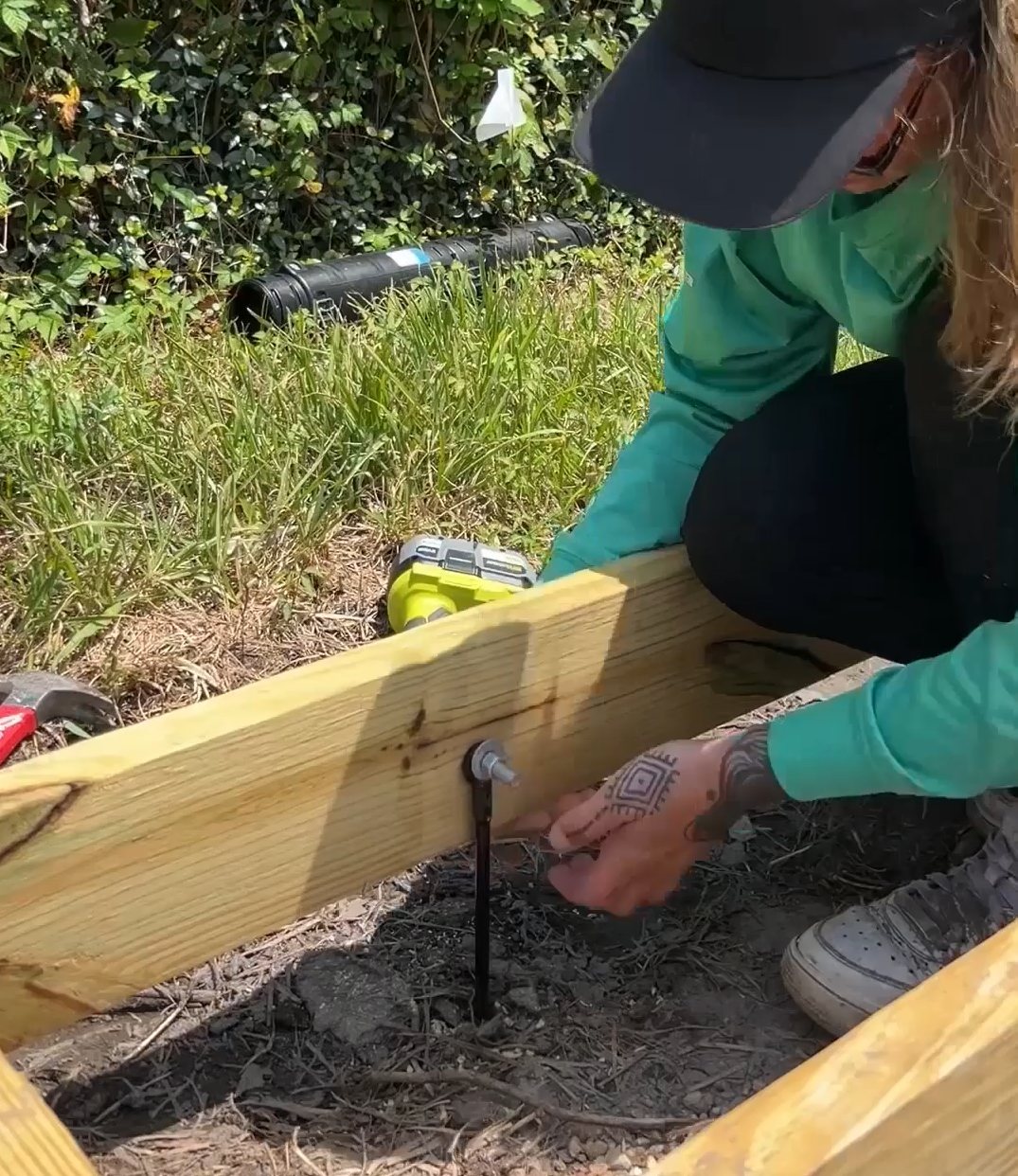
- Set each anchor at the frame. Place it right beside a corner post or rim joist, with a slight back angle of about 10 degrees so the strap pulls straight along the rod.
- Install to full depth. Twist auger anchors in with a bar, or a drill or impact driver with an adapter, until the eye sits at ground level. Hammer driven anchors down with their drive rod, then pull up on the cable to rotate and lock the head.
- Tie into the frame, not the boards. Run a galvanized cable or strap from the anchor to the rim joist, beam or post. Fix it with a lag eye screw, a through-bolt or structural screws.
- Tension it snug. Tight enough to take out slack, not so tight it pulls the frame off level.
One thing to know in cold climates. A floating deck rises a little when the ground freezes and settles back in spring. Check the straps each spring and re-tension any that have stretched or worked loose. Tie-downs do not stop frost heave. They hold the deck against wind.
Anchoring a pergola, roof or screen on a floating deck
A pergola on a floating deck is one of the most popular upgrades, and it changes the wind picture more than anything else. Posts, a roof, shade cloth or a privacy screen give the wind a big surface to push on, and that load travels down the posts into the deck.
So anchor the structure, not just the deck. Fix the pergola posts to the deck frame with structural post bases, then strap the frame to earth anchors at each pergola post. For a solid roof, or anywhere in a hurricane zone, get the connections designed for your wind speed. A plain open pergola with no roof catches far less wind, but in a windy area it still deserves anchors at the posts.
How to anchor a shed to the ground
Sheds face the same question, with more at stake: tall walls and a roof catch far more wind than a deck. The fix is the same hardware. A shed anchor kit is usually four auger anchors with cables or straps, one at each corner, tied to the floor frame. If your shed sits on TuffBlocks, the blocks carry the weight down and the anchors stop it lifting. In hurricane areas, follow the anchoring your shed maker or building department specifies.
Frequently asked questions
Quick answers to the questions we hear most about floating decks, wind and earth anchors.
Will a floating deck blow away in a hurricane?
Not in normal weather: its own weight holds it down. Hurricane-force gusts are different, because they can push harder than a deck weighs. In hurricane zones, add earth anchors at the corners and along the long sides as backup, connected to the frame with galvanized cable or strap.
Does a floating deck need to be anchored?
Usually not. A low deck in a typical backyard is held in place by its own weight. Add anchors as backup if you live in a hurricane, tornado or coastal wind zone, if the deck is raised on posts, or if you add a roof, pergola or privacy screen. They cost a few dollars each and take seconds to fit.
How do you anchor a floating deck to the ground?
Call 811, then auger an earth anchor into the ground beside each corner and along the long sides. Fasten each anchor to the rim joist or a post with a bolt, a lag eye screw or a galvanized cable.
How long does it take to install an earth anchor?
About 30 seconds once you know how: around 15 seconds to auger it in with an impact driver and adapter, and 15 seconds to fasten it to the subframe. Hard or rocky ground takes longer.
How much do earth anchors cost?
A 30-inch auger anchor typically costs $8 to $15, often sold in packs of four or six. Heavier HUD-rated mobile home anchors cost a little more.
What are hurricane anchors?
Hurricane anchors are earth anchors used to tie structures to the ground against wind. The same product is sold as ground anchors, auger anchors and mobile home anchors.
How deep do earth anchors go?
Most anchors for decks and sheds are 30 to 48 inches long and go in until the eye is level with the ground. Longer anchors reach firmer soil and hold more.
Can I anchor a deck that is already built?
Yes. Earth anchors install beside the frame, so you can add them to an existing floating deck without lifting it. Fasten each one to the rim joist or a post.
Are concrete deck blocks better in high wind?
No. The deck’s weight is what holds it down, not the block’s. The frame only sits on the block, so a heavier concrete block adds nothing. For extreme wind, earth anchors are what tie a deck to the ground.
Do TuffBlocks hold the deck down?
The deck’s own weight holds it down, and TuffBlocks carry that weight into the ground, up to 1,700 lbs per block. No deck block ties the frame to the ground, so for extreme weather, earth anchors add that tie.
How much does a floating deck weigh?
Around 10 lbs per square foot for the frame and boards, the figure the IRC deck tables use. That puts a 12 x 16 ft deck at roughly 1,900 lbs and a 16 x 16 ft deck at roughly 2,500 lbs.
Anchor holding values are manufacturer ratings in normal soil and vary with soil type and installation. In hurricane zones, check local code and have anchorage designed for your wind speed. This guide is general information, not engineering advice.